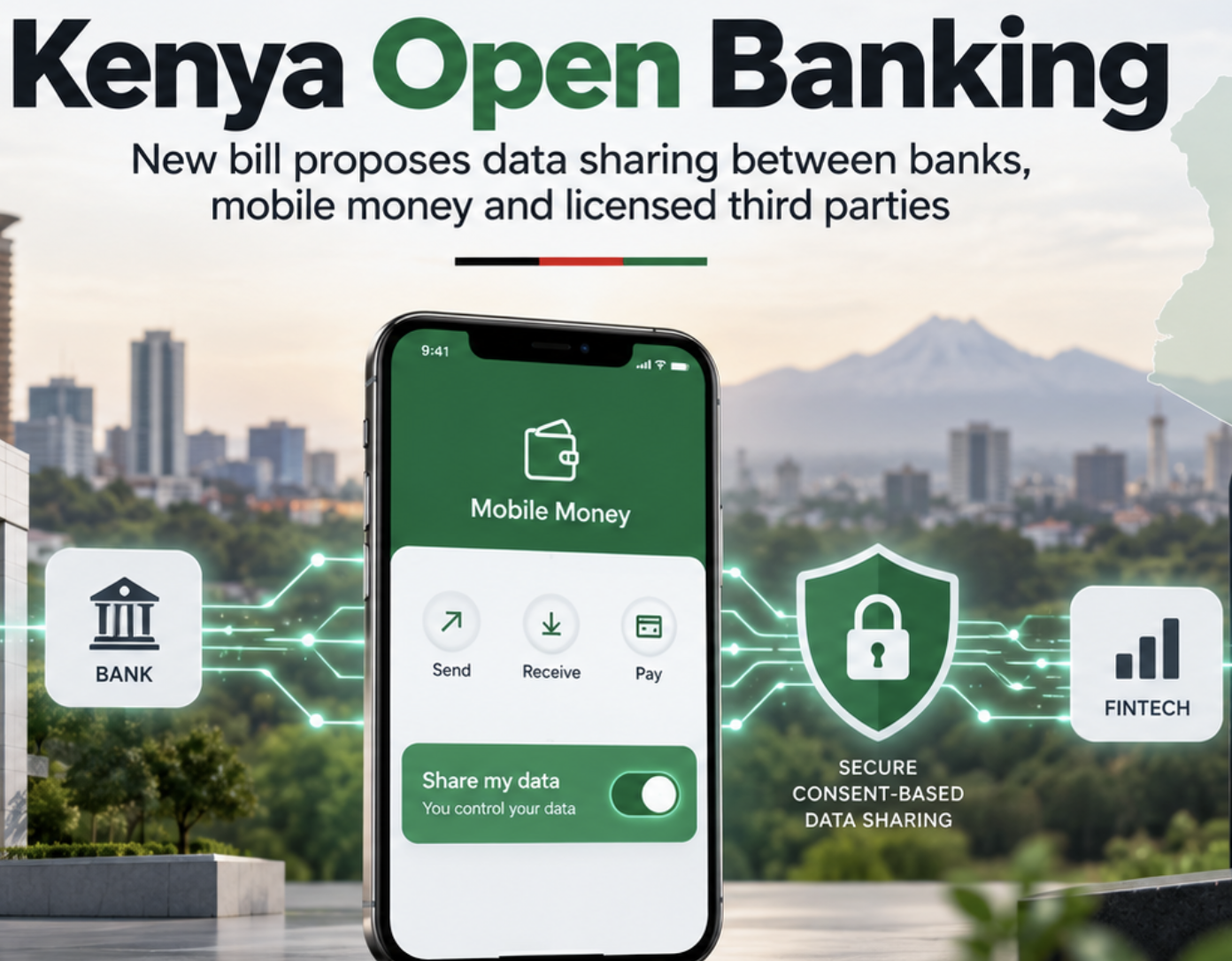
Kenya is moving towards open banking, with a proposed law requiring banks, M-Pesa, Airtel Money and other payment providers to build systems that can securely share customer financial data with licensed third parties.
The National Payment System Bill, 2026, jointly prepared by the National Treasury and Central Bank of Kenya (CBK), proposes an open-finance framework in which customers can authorise other financial providers to access their payment-account information.
Under the proposed system, customer consent would be mandatory before the information is shared.
The changes could allow fintech companies, banks and other licensed providers to develop services based on a more complete picture of a customer’s financial activity rather than relying only on information held within their own platforms.
What Open Banking Could Change
At present, banks and mobile money providers generally retain customer transaction information within their individual platforms.
Open banking would allow a customer, for example, to authorise a licensed fintech to access information held by their bank or mobile wallet when applying for a service.
The Bill would also give CBK powers to require banks, mobile money companies, digital wallets and other payment providers to make their systems interoperable, allowing them to communicate and exchange funds securely.
The government expects greater interoperability and data portability to encourage competition and innovation within Kenya’s financial sector.
It could also reduce some of the advantages held by dominant financial institutions by giving smaller fintech companies authorised access to information required to develop personalised financial products.
However, the changes will place greater emphasis on data protection and cybersecurity, given the sensitivity of financial records.
The Bill leaves details such as the categories of data that can be shared, access conditions and potential charges to regulations that would later be developed by CBK.
If Parliament approves the proposed law, existing payment service providers would have one year to comply with its requirements.
Kenya would join a growing number of countries adopting open banking frameworks as financial services become increasingly interconnected.
For consumers, the success of the system will depend on whether greater competition produces cheaper and more convenient services without compromising the security and privacy of their financial information.