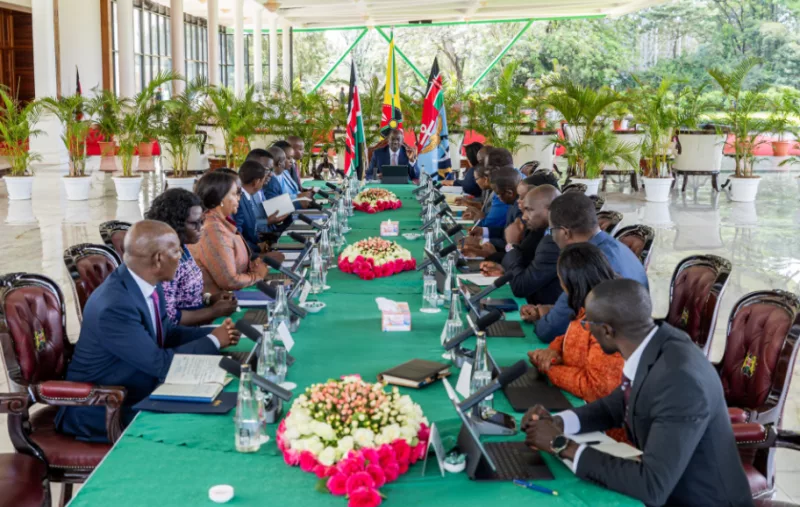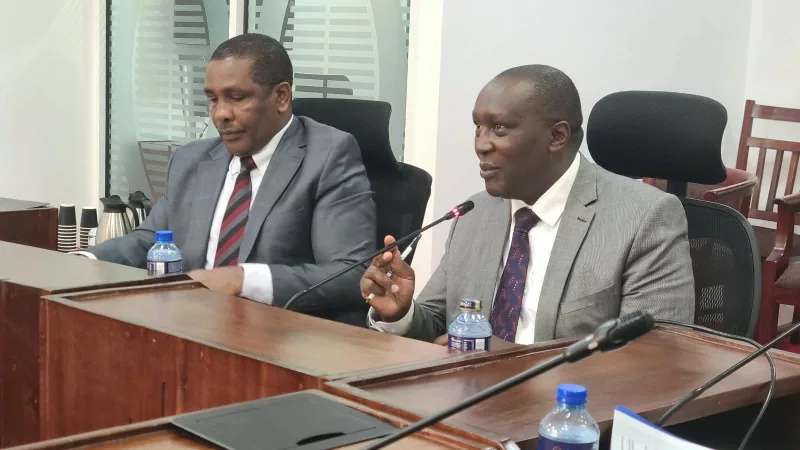
MPs of the National Assembly’s Blue Economy, Water and Irrigation Committee told the Water Services Regulatory Board (WASREB) to fix provider inadequacies before any water tariff increase is considered.
The committee interrogated WASREB chief executive Leparan Tialal on whether Kenyans were paying fair water tariffs and if charges translated into reliable, accessible services.
Chair Kagongo Bowen asked, “You have said that margins of these water providers is small and that’s why you are proposing a raise in the rate, do you want Kenyans to pay for negligent water service providers?”
Lawmakers highlighted that about 48 per cent of water produced by providers is lost as non-revenue water, questioning the justification for higher tariffs.
MPs demanded a detailed breakdown of tariff calculations, noting that some consumers pay about KSh45 per cubic metre while others face up to KSh300.
They called for enforcement against poorly performing utilities and for tariff reviews to be linked to measurable service improvements.
The committee also asked for historical tariff trends and comparisons across major towns to help them explain rising water bills to constituents.
MPs warned that higher charges could squeeze low-income households and threaten community-managed water projects funded by residents.
The regulator replied that charges reflect the cost of treating, pumping, distributing water, maintaining infrastructure, servicing debt and financing investments, and must balance affordability with utilities’ financial sustainability.
WASREB said approved tariffs carry performance conditions on water quality, service coverage and water losses, which are monitored for compliance.
The regulator also said about 106 water service providers serve roughly 60 per cent of Kenya’s population, many rural areas relying on smaller community schemes.
MPs urged WASREB to provide clearer information on consumer protection, public participation in tariff reviews, and safeguards for community-managed projects.
The committee asked the regulator to submit detailed figures on tariff disparities, public participation, water losses and the link between higher charges and service delivery.