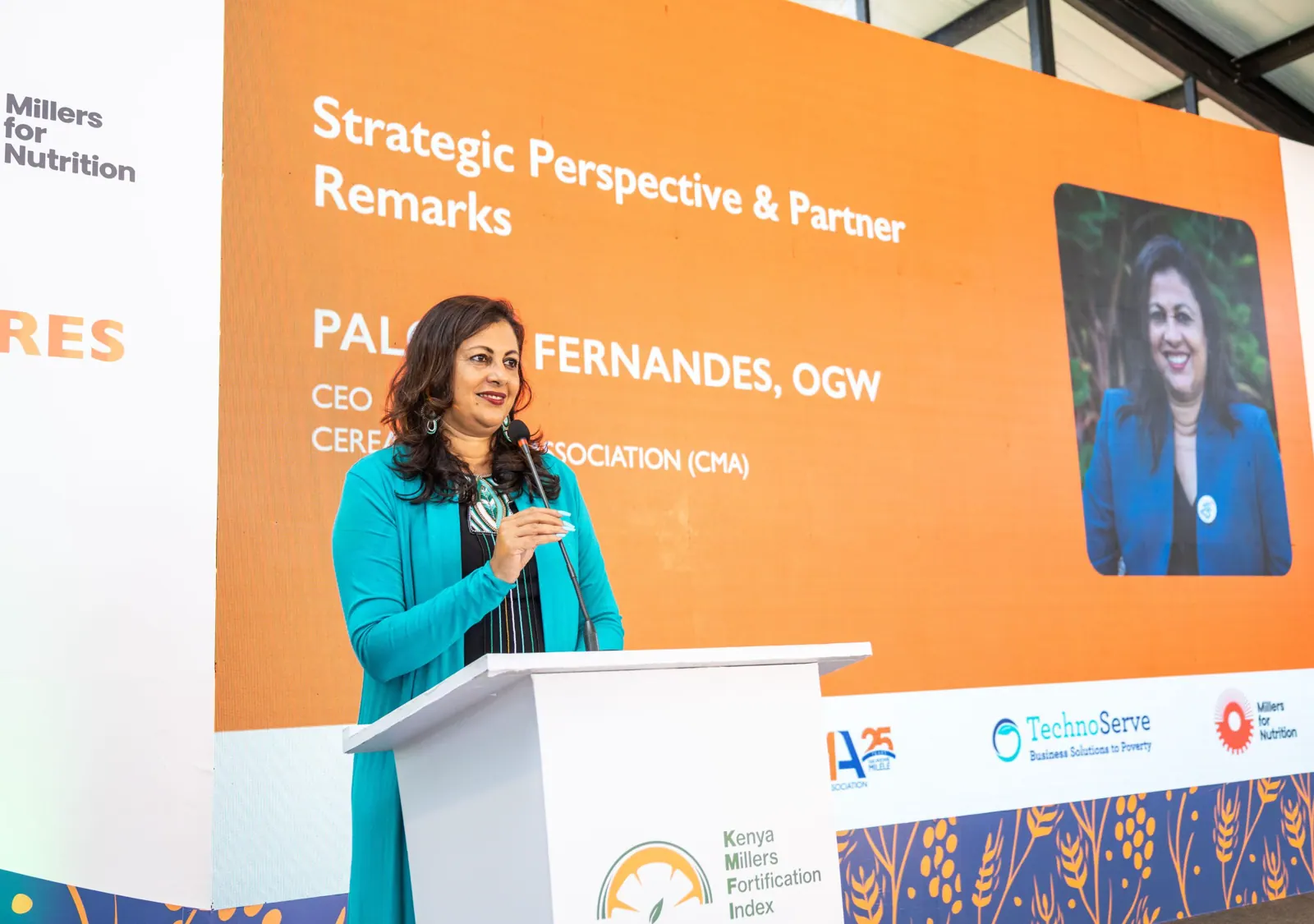
The 2026 Kenya Millers Fortification Index (KMFI) Awards recognised 32 food-processing companies that together market 144 brands, with the indexed products estimated to reach 45 million Kenyans each day.
Launched in 2022 with five participants covering 41 brands, the index has grown to include maize flour, wheat flour and edible oils, expanding its scope to the current 32 firms.
Scoring is split evenly between operational performance – such as staff training, raw-material sourcing, production controls, governance and consumer engagement – and independent laboratory analysis of micronutrient levels and product safety.
In the large-scale maize and wheat flour segment, Mombasa Maize Millers Ltd – Mombasa and Unga Limited were named joint top performers; United Millers and Baraka Flour Mills led the medium-scale category, while Spice World Ltd topped the small-scale group. Kapa Oil Refineries Ltd secured first place in edible oils, followed by Pwani Oil Ltd and Vipingo Industries Ltd.
Paloma Fernandes, chief executive officer of the Cereal Millers Association, said “Localising the KMFI is not just about moving a programme from one organisation to another. It is about the private sector embracing the initiative, shaping its future, investing in it and making sure it continues long after the initial programme support has ended.” Rizwan Yusufali, global programme director of Millers for Nutrition, added “The combination of operational assessment and independent product testing is important because it gives the industry a credible way to measure progress and build trust around food fortification.”
CMA board chairman Beju Shah warned that food manufacturers still confront rising production costs, overlapping regulations, pending subsidy payments and port delays.
The initiative comes as Kenya grapples with widespread micronutrient gaps, with the 2022 Kenya Demographic and Health Survey reporting 18 per cent of children under five stunted, 4 per cent wasted, 11 per cent underweight, 42 per cent of pregnant women anaemic, about one-third of women deficient in folate and an estimated 82 per cent of children under five lacking adequate zinc.