The Government is reviewing how human wildlife conflict compensation is administered across Kenya. Affected communities are seeking faster support after suffering losses caused by wildlife. Tourism and Wildlife Cabinet Secretary Rebecca Miano appeared before the National Assembly Public Petitions Committee.
She was accompanied by Wildlife Principal Secretary Silvia Museiya and Kenya Wildlife Service officials. The meeting focused on compensation, conflict mitigation and stronger engagement with communities living alongside wildlife. It followed Public Petition No. 4 of 2026 concerning human wildlife conflict in Kajiado County.
Kajiado West MP George Sunkuyia presented the petition before the parliamentary committee. The petition places attention on communities experiencing losses linked to wildlife movements. It also brings wider concerns about compensation and conflict mitigation into the parliamentary process.
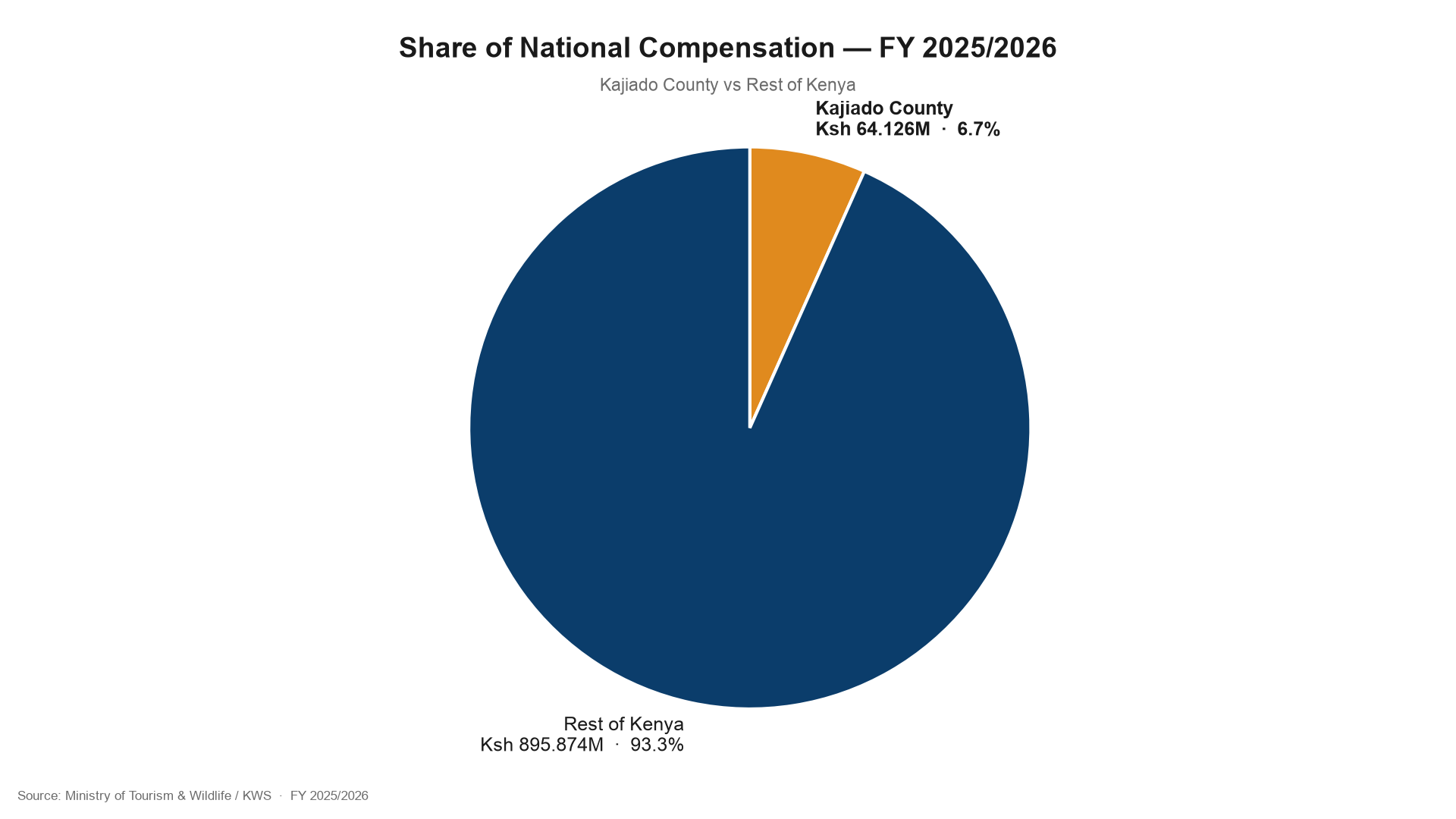
Museiya told the committee that approximately Ksh 960 million was disbursed nationally during 2025/2026. The funds supported beneficiaries affected by human wildlife conflict across different parts of Kenya. Kajiado County received Ksh 64.126 million for beneficiaries during the same financial year.
The compensation framework addresses losses associated with wildlife incidents affecting communities and households. Such losses can include deaths, injuries, livestock predation, crop destruction and property damage. These payments form an important part of the Government's wider response to wildlife related conflicts.
Miano said the discussions examined ways to improve operational systems and reduce administrative delays. She also highlighted stronger partnerships with communities living alongside wildlife as part of conservation planning. Community participation remains important because conservation activities directly affect people near wildlife habitats.
For affected households, wildlife conflict can create significant economic and social pressures. Livestock losses can reduce household assets, while crop destruction can affect agricultural income. Injuries and deaths can also create additional financial burdens for families and communities.
Parliament has previously examined challenges affecting compensation claims and their payment. Earlier committee findings identified backlogs, administrative difficulties and gaps in community engagement. The findings also highlighted the need for predictable funding and efficient processing of approved claims.
The wider conflict is influenced by several factors affecting communities and wildlife habitats. Seasonal wildlife movements can bring animals into farms, settlements and grazing areas. Changes in land use and inadequate protective infrastructure can also increase interactions between people and wildlife.
Compensation is therefore only one part of the broader response to human wildlife conflict. Prevention measures, community education and improved infrastructure can help reduce recurring incidents. Stronger engagement can also give communities opportunities to participate in conservation decisions.
The Kajiado petition places these issues within a formal parliamentary process involving government agencies. It also brings elected representatives into discussions about concerns raised by affected communities. The committee provides a platform for examining these concerns and reviewing existing government measures.
For communities living near wildlife areas, compensation depends on more than the amount allocated. Timely verification, approval and payment can determine how quickly affected households recover from losses. Efficient administrative systems can therefore complement funding provided through the national compensation framework.
The latest discussions reflect the continuing effort to balance conservation with community interests across Kenya. Wildlife remains an important national asset, while communities can bear significant costs when conflicts occur. Sustainable management therefore requires attention to wildlife protection and affected residents.
The Ministry of Tourism and Wildlife and KWS are expected to continue addressing the issues raised. Further improvements could affect compensation administration and conflict mitigation in Kajiado and other wildlife areas. Continued community participation will remain relevant as Kenya works to manage conflict alongside conservation objectives.