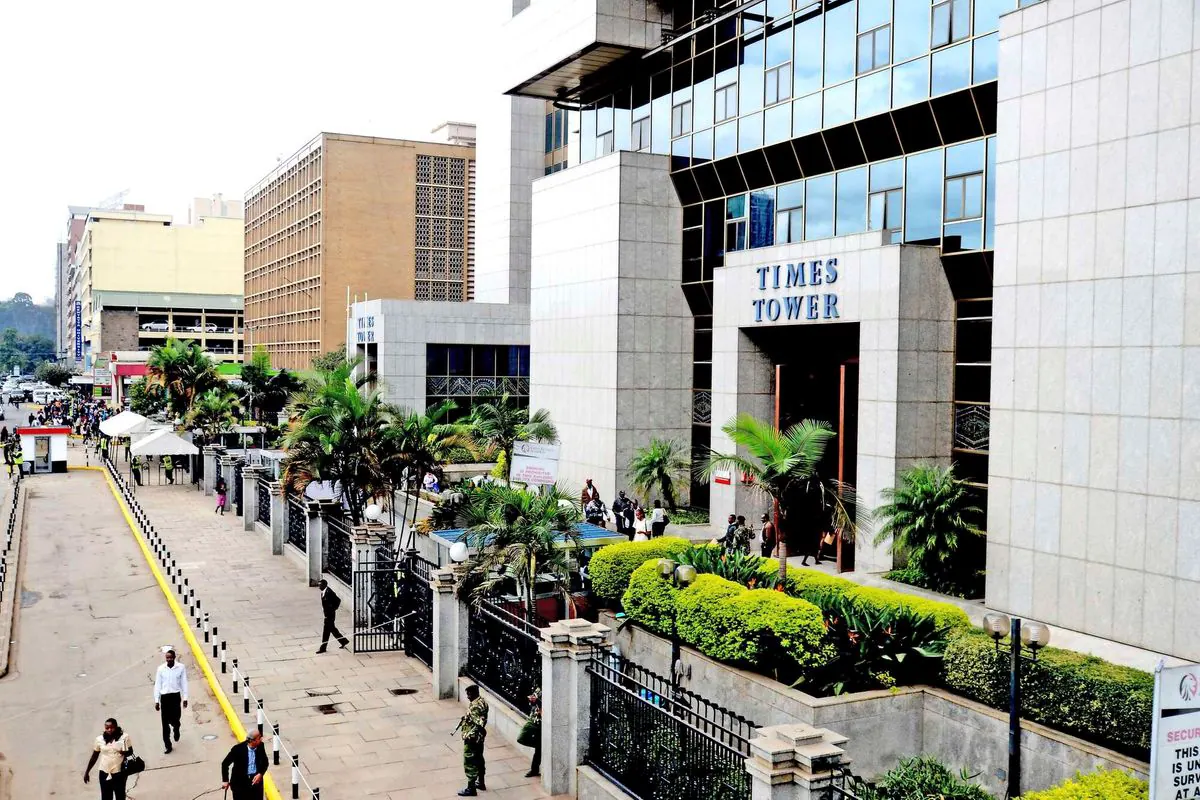
The Kenya Revenue Authority (KRA) recorded a revenue shortfall of KSh58.2bn in the first quarter of the 2026/27 financial year.
Ordinary revenue receipts, which include tax and non-tax revenues, totalled KSh655.8bn, up 14.4 per cent for the three months to September from KSh573.5bn in the same period of 2025.
The National Treasury said in a presentation that “by the end of September 2026, revenue collection was below target by KSh40.4 billion mainly on account of shortfalls in ordinary revenues of KSh58.2 billion while ministerial appropriations in aid (A-i-A) surpassed target by KSh17.8 billion.”
It added that “revenues grew by 15.9 per cent by the end of September 2026 compared with a growth of 1.4 per cent at the end of September 2025. Ordinary revenues grew by 14.4 per cent compared to a contraction of 2.9 per cent over the same period.”
Income tax receipts fell short by KSh25.4bn, with actual collections of KSh297.9bn against a target of KSh323.3bn, while excise duty receipts missed the target by KSh16.3bn.
The Treasury warned that the recorded revenue shortfalls are expected to widen the budget deficit and force additional borrowing to fund government spending.
By the end of September 2026, total expenditure had exceeded its target by KSh116.9bn, driven by an above-target absorption of recurrent expenditure of KSh59.3bn and development expenditure of KSh34.7bn.
Transfers of equitable share revenues to county governments were also above target by KSh22.9bn.
The fiscal deficit, including grants, reached KSh329.1bn in the first three months, equivalent to 1.6 per cent of gross domestic product, surpassing the target of KSh174.8bn or 0.8 per cent of GDP.
The National Treasury identified revenue erosion, rising debt and increasing spending needs as the main fiscal pressures on the budget.
It said cost rationalisation and revenue-base expansion remain the key reforms needed to improve domestic revenue, which has fallen from 18.1 per cent of GDP in 2013/14 to a projected 13.9 per cent in 2026/27.
“The strategy aims to progressively strengthen tax revenue mobilisation by simplifying and harmonising tax laws, rationalising and targeting tax expenditures and creating a simple, predictable and fair tax system,” the National Treasury said.
The Treasury also plans to boost non-tax revenues by enhancing the capacity of ministries and State departments (MDAs) to generate income from public services and improve their operational systems.
On the spending side, the Treasury expects heavy capital-expenditure projects to be shifted to the National Infrastructure Fund (NIF), which was established in March 2026 and capitalised with KSh310.6bn from Kenya Pipeline Company (KPC) and divestiture proceeds from Safaricom Plc.
The reforms are projected to strengthen the fiscal position and reduce the fiscal deficit from 6.8 per cent of GDP in 2025/26 to 5.5 per cent in the current fiscal year.