The National Treasury reported that the state disbursed KSh217.9 billion for roads, housing and other development projects during the three months to September, surpassing the planned amount by KSh69.8 billion.
This outlay was 47.1 per cent above the KSh148.1 billion target set for the first quarter of the financial year ending June 2027, and it represented a 54.3 per cent rise from the KSh141.2 billion spent in the same period last year, the fastest first-quarter growth in at least seven financial years.
The increase of KSh76.7 billion exceeds six times the KSh12.2 billion rise recorded in the first quarter of 2024/25, highlighting an acceleration in government investment programmes.
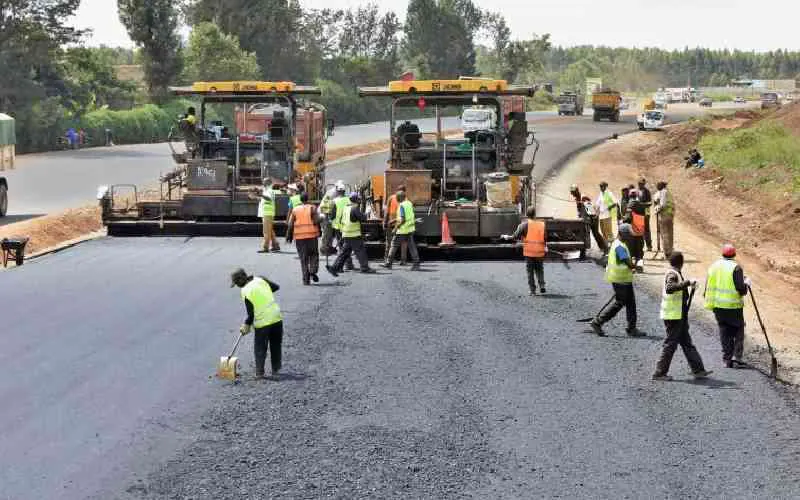
The State Department for Roads received the largest share at 20.7 per cent, amounting to KSh43.96 billion, while the Department of Housing and Urban Development accounted for 18.6 per cent or KSh39.54 billion; together the two ministries comprised 39 per cent of the total development spending.
President William Ruto’s administration is directing major resources toward infrastructure and affordable-housing schemes, projects that are visible to voters as the country approaches the August 2027 General Election.
The housing programme is funded through a 1.5 per cent payroll deduction that is matched by employers, but opposition leaders argue that the priority should be raising household incomes rather than expanding housing supply.
Nairobi Senator Edwin Sifuna said, “The slum problem in this country is not a housing problem, it is an income problem. As long as people don’t have money, there will always be slums.”
The government maintains that Kenya faces a housing shortfall of close to 2.5 million units, a deficit that continues to widen.
President Ruto defended the use of public land for affordable housing, asking, “Between the national government land and county government land being used to build houses which benefit Kenyans and that same land being left to grabbers to take it or to own it, which is better?” and adding, “Alternatively, between that land being ‘squattered’ and slums developing into those pieces of land, and for it being converted into decent affordable dwelling for Kenyans, which is better?”