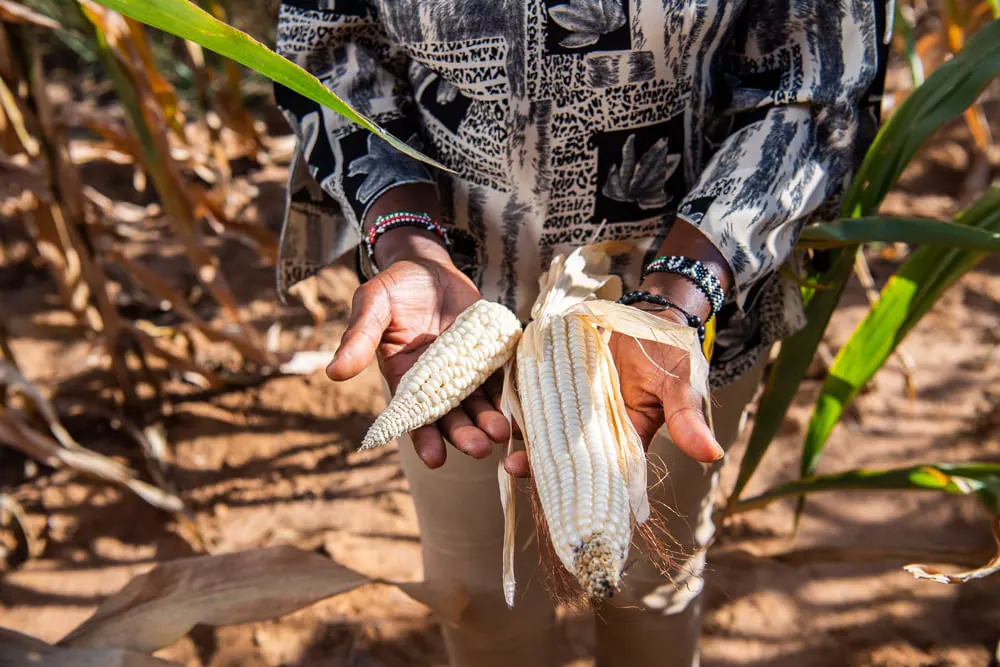
ActionAid International released a report titled Transforming Food Systems in Africa – The Case for Investing in Agroecology, finding that Kenyan farmers could raise profits by an average of 37.8 per cent by switching to agroecological methods that cut spending on synthetic fertilisers and pesticides.
The study examined farms in three Kenyan counties and observed higher profitability after one to three years of adopting practices such as on-farm composting, organic waste recycling and natural biopesticides, which also improve soil health.
In Murang’a County, growers who applied agroecology to amaranth recorded yields 45 per cent above those using conventional techniques, while kale yields were 34 per cent higher.
The report warns that reliance on imported synthetic fertilisers makes farmers vulnerable to global price swings and supply interruptions caused by conflicts and other market shocks.
The report states, “Farmers cut the costs of synthetic fertilisers and pesticides when switching to on-farm composting, recycling of organic waste and natural biopesticides.” It also notes that healthier soils retain moisture longer, lowering irrigation requirements and generating additional cost savings for producers.
Evidence from long-term comparative trials carried out by the Research Institute of Organic Agriculture in Kenya, Bolivia and India is cited to show that organic systems can boost yields and deliver environmental benefits.
The document cautions that the shift may take up to three years for farms to reach yields comparable to conventional production, depending on soil conditions, farmer expertise and available support.
ActionAid recommends that the Kenyan government expand financing for farmer training, agroecological research and locally manufactured agricultural inputs, while maintaining current fertiliser subsidy schemes.
Reducing dependence on imported inputs, the report says, could shrink the nation’s fertiliser import bill and ease the financial burden of subsidies.
Arthur Larok, Secretary-General of ActionAid International, said agroecology can enhance economic resilience, raise farmer incomes and contribute to climate-change mitigation.
He added that “Farmers are improving yields and income while reducing dependence on costly imported inputs and protecting the soils and ecosystems on which food production depends.”
The analysis also draws on agricultural research and experiences from ten African nations, including Kenya, Ethiopia, Ghana, Nigeria, Tanzania, Uganda, Zambia and Zimbabwe.