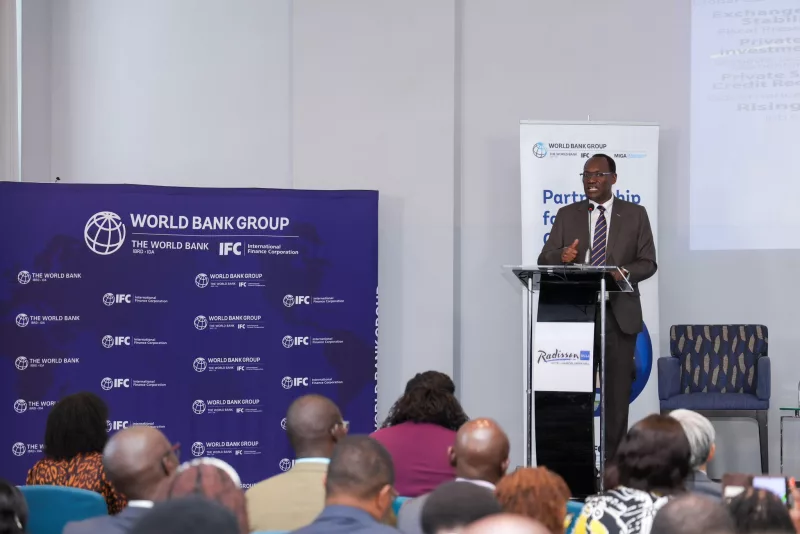
The World Bank’s latest Kenya Economic Update warns that corruption and collusion are costing Kenya between 1.2 per cent and 4 per cent of GDP each year.
The lender estimates the graft widens the fiscal deficit by roughly two per cent of GDP annually, creating extra borrowing needs that add to the country’s public debt, which stands at about 70.6 per cent of GDP.
The report says that moderate anti-corruption reforms could lift Kenya’s GDP by 8.7 per cent by 2035, while a stronger reform scenario could raise output by 22.3 per cent and cut the debt-to-GDP ratio by up to 18 per cent.
Improved controls could also boost household consumption by as much as 27 per cent and generate better jobs for up to 7.7 million people.
Business surveys show that the share of firms citing corruption as a major or severe constraint rose to 39 per cent in 2025 from 25 per cent in 2013, and 36 per cent reported at least one bribe request in the previous year.
The World Bank links the governance gap to a “governance premium” on sovereign borrowing, meaning investors demand higher returns, which together with higher debt-service costs, squeezes fiscal space – roughly a third of government revenue is already absorbed by interest payments.
Prime Cabinet Secretary Musalia Mudavadi previously cited an estimate of KSh608 billion a year, equivalent to 7.8 per cent of GDP, in losses from corruption.
National Treasury Principal Secretary Chris Kiptoo defended ongoing reforms, highlighting digital tax administration, the e-Citizen platform, electronic procurement and the Integrated Financial Management Information System as ways to improve transparency and reduce manual manipulation.
The World Bank raised its 2026 growth forecast to 4.6 per cent from 4.3 per cent after stronger-than-expected performance in the first half of the year, but warned that fiscal slippage and the upcoming August 2027 election could increase uncertainty and pressure public finances.