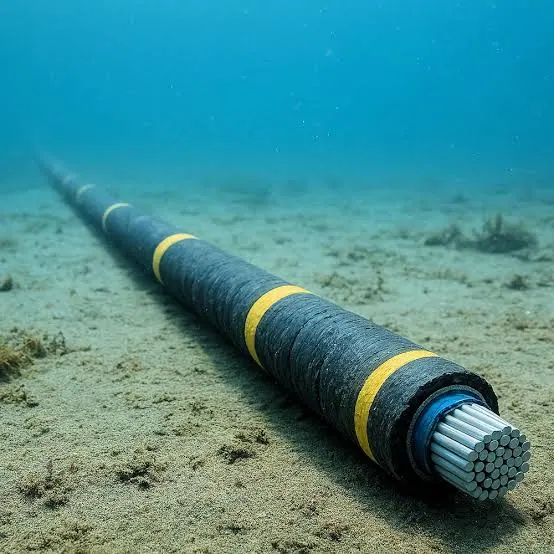
The World Economic Forum’s Global Cybersecurity Outlook 2026 notes that 99 per cent of international data moves through undersea cables, while only 18 per cent of organisations factor this reliance into their cyber-risk strategies, and Kenya suffered service interruptions from SEACOM and EASSy cuts in May 2024.
The same survey found that satellites, GPS and satellite communications are included in risk plans by just 15 per cent of respondents, the lowest figure among categories such as geopolitically motivated attacks (64 per cent), disinformation (49 per cent), IT/OT convergence (42 per cent) and natural disasters (41 per cent).
“Our digital world runs through cables lying deep beneath the ocean’s surface,” said Doreen Bogdan-Martin, secretary-general of the International Telecommunication Union, adding that the undersea systems are “the unseen lifelines of our global economy — and they are also uniquely vulnerable.”
The Outlook, the fifth annual edition produced with Accenture, draws on a survey carried out between August 25 and October 1, 2025 that received 873 responses from 99 countries, normalised to 804 qualified participants from 92 countries, including 316 chief information security officers, 105 chief executives and 123 other C-suite executives.
On March 14, 2024, four cables – ACE, SAT-3, WACS and MainOne – were taken offline after a suspected underwater rock slide off Côte d’Ivoire, causing degraded or near-total connectivity loss in 13 countries, with Côte d’Ivoire experiencing a near-total outage; repairs were projected for early April for SAT-3 and mid-May for MainOne.
Two months later, on May 12, 2024, disruptions to the SEACOM and EASSy systems reduced traffic in Kenya, Tanzania, Rwanda and Uganda and also affected Malawi, Mozambique and Madagascar, with Tanzanian traffic falling to roughly 30 per cent of expected levels; neither incident was attributed to a cyberattack.
The report explains the low attention to cables by noting that organisations contract carriers or cloud providers and the physical routes are invisible to them, so they rarely appear on internal risk registers, a reasoning similar to that applied to supply-chain inheritance risk.
Cloud technologies were identified as the second-most cited influence on cybersecurity over the next twelve months after artificial intelligence, mentioned by 61 per cent of respondents, and the Outlook cited non-security incidents such as an AWS DNS misconfiguration, a Microsoft Azure outage in October 2025 and a Cloudflare disruption in November 2025 as examples of provider-level failures cascading through ecosystems.
Looking ahead, the Outlook projects that satellite-based positioning, navigation and timing will become critical for aviation, maritime, power-grid coordination and financial transactions by 2030, while undersea cables and satellite communications will underpin emergency services, cloud infrastructure and global data exchange, with climate volatility expected to amplify cyber risk by disrupting power, data and logistics networks.
The Forum advises that resilient organisations map their ecosystem in detail (44 per cent do so versus 23 per cent of less resilient firms) and conduct incident simulations with partners (44 per cent versus 16 per cent), yet 82 per cent of organisations have not undertaken such planning exercises.