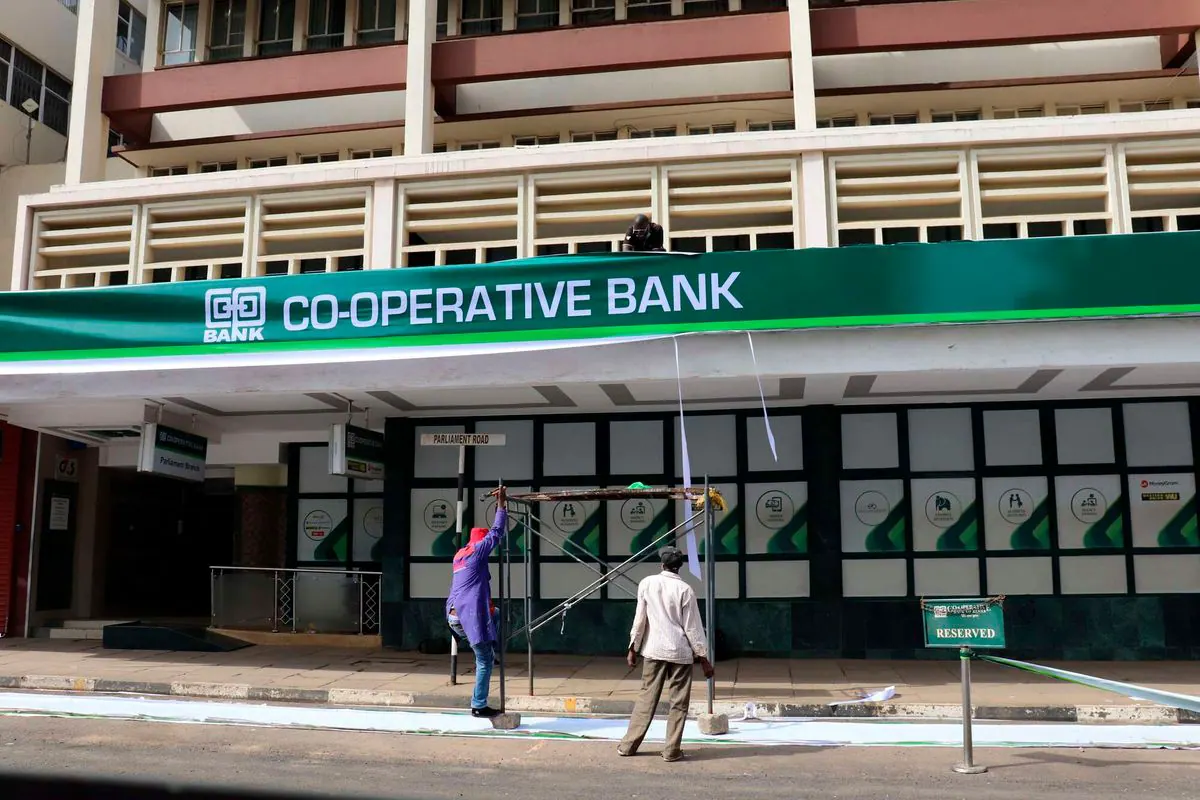
The National Treasury cleared a KSh12.9bn legacy debt for Co-operative Bank, one of eleven firms receiving write-offs.
The write-off covers loans dating back to the 1970s and was recorded in the year ended June 2026.
Treasury said recovery was hindered by borrowers’ financial difficulties, collapsed entities and missing documentation.
Co-op Bank, Kenya’s third largest lender by assets, had KSh267m written off during the year, down from an original KSh339m.
A senior bank official explained the exposure stemmed from an old government on-lending programme for smallholder farmers in cotton, irrigation, pyrethrum and dairy, not recent commercial lending.
The official noted that most farmers failed to repay, leaving the outstanding amount in Treasury’s books.
The write-off leaves Equity Bank as the only privately owned lender still on Treasury’s on-lending list, with the largest lender by deposits owing KSh279m from a KSh534m channel.
Treasury said the write-offs form part of a KSh26.33bn book-clean-up, seeking Cabinet approval to write off KSh13.29bn principal and waive KSh13.04bn interest.
Treasury wrote that the write-offs aim to clean loan records, address audit queries and implement PAC recommendations on non-performing government loans.
The Treasury added that loans remained unpaid for years due to financial constraints, collapsed projects, ceased operations, missing records, disputes and legal changes shifting liabilities to counties.
The defunct Local Government Loans Authority held the largest balance at KSh7.594bn before being wiped.
Other entities written off include the National Water Conservation and Pipeline Corporation (KSh2.461bn), National Irrigation Board (KSh1.128bn), Kenya Meat Commission (KSh940m), Moi University (KSh231m), Catering Levy Trustees/Kenya Utalii College (KSh122m), Agricultural Settlement Fund and Central Land Board (KSh74m), Kenya Urban Transport Various Towns (KSh41m), Mombasa Pipeline Board (KSh23m) and Mumias Outgrowers Company (KSh17m).
Cabinet approval was sought under Sections 69 and 77 of the Public Finance Management Act, 2012 and the PFM Regulations after recovery efforts.
Officials said the scale of the write-offs highlights the long-term risk of government lending to public entities that fail to generate sufficient income, burdening taxpayers.