The Treasury announced a KSh651 billion budget to extend the standard gauge railway from Naivasha to Malaba.
The figure represents an increase of nearly a third, or KSh148 billion, over the KSh502.9 billion estimate published a year earlier.
Phase 2B and 2C of the project are outlined in the Treasury’s October 2026 report.
Financing of the extension is expected to draw KSh618.8 billion from external financiers, although the exact mobilisation method has not been detailed.
The new phase will be funded through revenue securitisation and built by a Chinese contractor, signalling a shift in Kenya-China infrastructure financing.
The first SGR section linking Mombasa to Nairobi was completed in 2017, but the project stalled in Naivasha after China reduced Belt and Road funding, leaving a gap of more than 350 kilometres to the Ugandan border.
Under the securitisation plan, Kenya will ring-fence public cash flows such as the railway development levy and borrow against them via special-purpose vehicles.
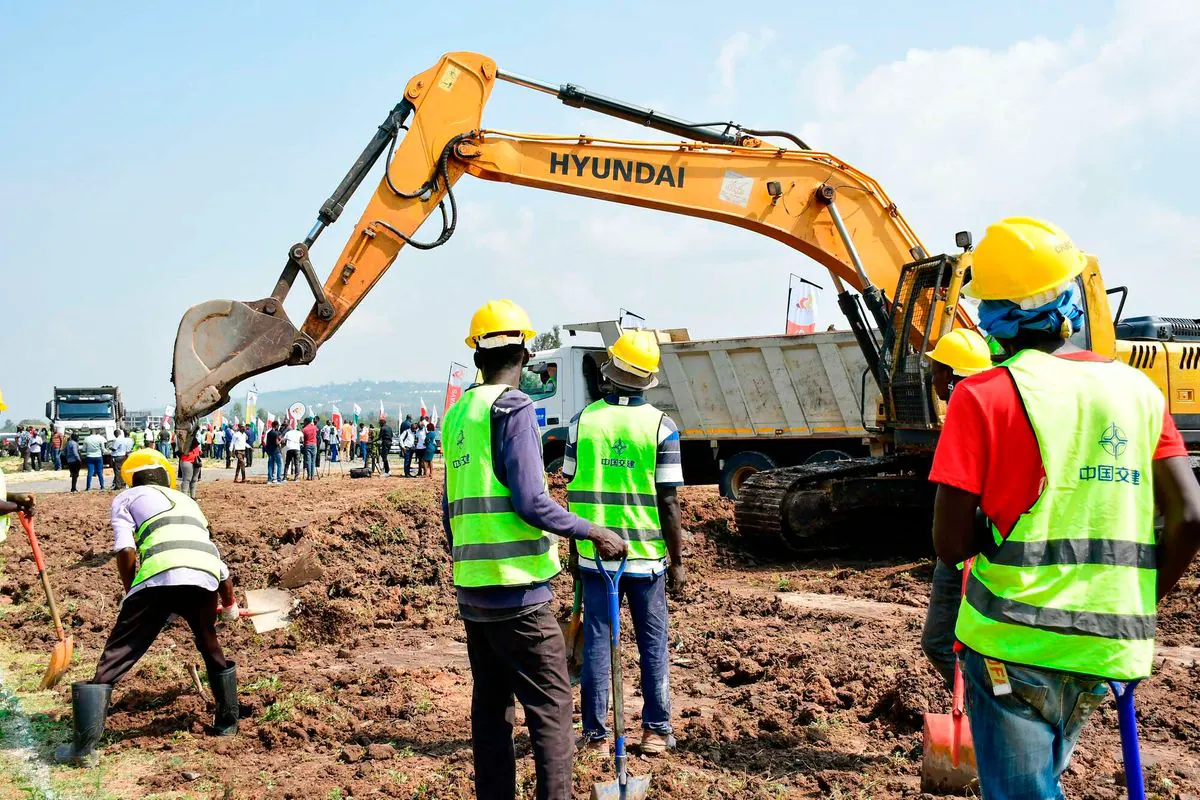
President William Ruto formally launched the extension on March 19.
Route alignment work is complete and the line will pass through Narok, Bomet, Kericho, Nyamira and Kisumu before terminating at Malaba on the Kenya-Uganda border.
Phase 2B will cover about 264 kilometres from Naivasha to Kisumu, including an 8.69-kilometre branch to the proposed Kisumu Port, while Phase 2C will add 107 kilometres from Kisumu to Malaba.
The original Mombasa-Nairobi section was financed largely by Chinese loans of roughly KSh465.7 billion, and the Nairobi-Naivasha extension received an additional KSh191.6 billion in Chinese financing.
China has scaled back large-scale infrastructure financing under its “small yet beautiful” policy, making further funding harder to secure.
The government previously indicated it would raise up to KSh390 billion through securitised bonds backed by future Railway Development Levy collections, the levy being set at two per cent of the customs value of imported goods.
The SGR currently runs from Mombasa through Nairobi to Suswa, a route originally intended to link Kenya and Uganda but halted by a financing shortfall.
China Communications Construction Company and its subsidiary China Road and Bridge Corporation have been selected to extend the SGR, reportedly via a public-private proposal that does not appear on the PPP Directorate’s list.
Roads and Transport Cabinet Secretary Davis Chirchir said the government will fund construction while a private investor will supply rolling stock.
“We have a framework where we are seeking to commercialise aspects of the project that are profitable,” Chirchir said.
“So with that investment of $5 billion, we will be looking to reduce the portion that would otherwise go to freight—buying the engines, bogies and rolling stock,” he added.
Investors will recover money from passenger and freight charges and pay the State a usage fee, with the private-sector roll-out of rolling stock intended to avoid heavy upfront spending and lower borrowing needs.
“We are seeking a freight concession. The way we build a road and people buy their vehicles and run on it—we will build the rail, get investors to provide the rolling stock, and concession the freight,” Chirchir said.
The private-sector component is aimed at easing the accumulation of Chinese debt amid Beijing’s demand that the line generate sufficient revenue to refinance loans.
It is not yet clear whether the SGR will operate as a concession; attempts to obtain clarification from the Cabinet Secretary have not been answered.
Kenya Railways Corporation reports that civil works on the extension have not started, pending land acquisition.
The government says land compensation has begun, the feasibility study is finished and environmental and social impact assessment and resettlement action plan studies are complete.
Contractor KRC has reviewed the proposed route alignment and land use and will acquire more than 5,000 acres for the expansion.
The National Lands Commission has identified over 5,000 acres for acquisition along the corridor in Nakuru, Narok, Bomet, Kericho, Nyamira, Homa Bay and Kisumu counties.
The Ruto administration views the railway expansion as a means to lower the cost of doing business and improve the movement of people and goods.