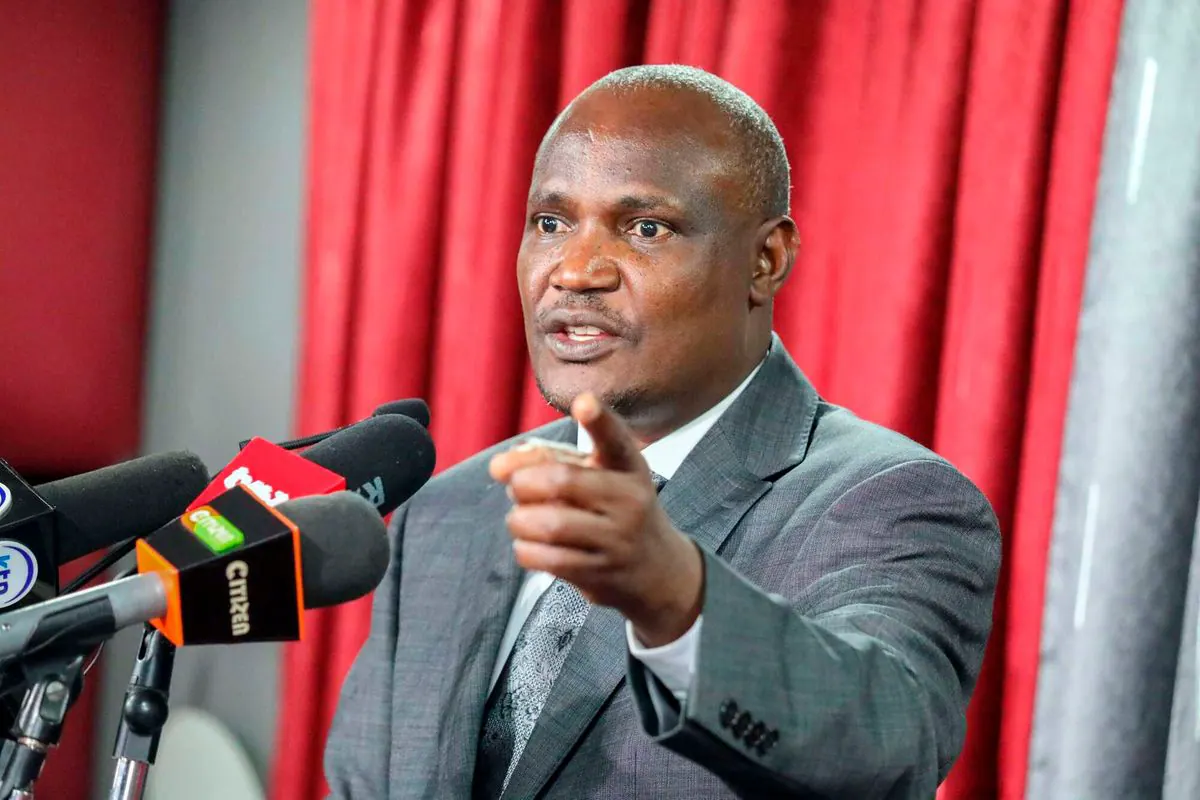
Treasury Cabinet Secretary John Mbadi said a Bill will be presented to the National Assembly next week to amend PAYE and set a zero per cent rate on monthly earnings up to KSh32,333.
The proposal also eliminates the personal relief of KSh2,400 that currently reduces PAYE for all employees.
Under the draft, income up to KSh32,333 becomes tax-free while the existing rates of 25, 30, 32.5 and 35 per cent stay unchanged for higher brackets.
Mbadi estimated that a worker earning KSh32,333 could save roughly KSh2,083 each month.
Finance and Planning Committee Chairperson Kuria Kimani said the legislation will give effect to changes announced by President William Ruto to ease the tax load on lower-income earners.
Treasury calculations show an extra 362,846 formal sector workers will be exempt from tax, increasing the number of non-paying workers to 1.69 million from the current 1.32 million.
The share of salaried workers liable for payroll tax would drop from 2.14 million to 1.77 million, representing 51 per cent of the 3,468,997 formal sector workforce.
Official data indicate 1.36 million Kenyans earned below KSh50,000 in 2024, making up 42.2 per cent of the 3.21 million formal sector employees, while 12 per cent earned above KSh100,000.
Employees earning between KSh32,334 and KSh50,000 would see tax reduced by up to KSh596; those on KSh60,000 would pay an additional KSh473; and workers on KSh100,000 and KSh200,000 would face extra liabilities of KSh892 and KSh3,867 respectively.
The plan shifts the tax burden onto higher earners, with those earning over KSh50,000 expected to pay more under the new bands.
The Kenya Bankers Association estimates that workers’ purchasing power has fallen by up to 12 per cent over the past five years due to rising taxes and living costs.
The Treasury also intends to abolish stamp duty on land and property deals below KSh1 million and to remove the 25 per cent import duty on mobile phones.
Mbadi said the proposals will be submitted to Parliament for approval and that the Bill must pass before it can take effect.
The reforms follow a series of tax changes in 2026, including amendments to capital gains tax and the Finance Act 2026 and Tax Laws (Amendment) Act 2026 that altered petroleum products and excise duty.
The review of tax exemptions under the Medium-Term Revenue Strategy for 2024/25 to 2026/27 also raises questions about other incentives such as insurance relief.
The changes are slated for debate ahead of the 2027/28 budget, which will be prepared before the August 2027 General Election.