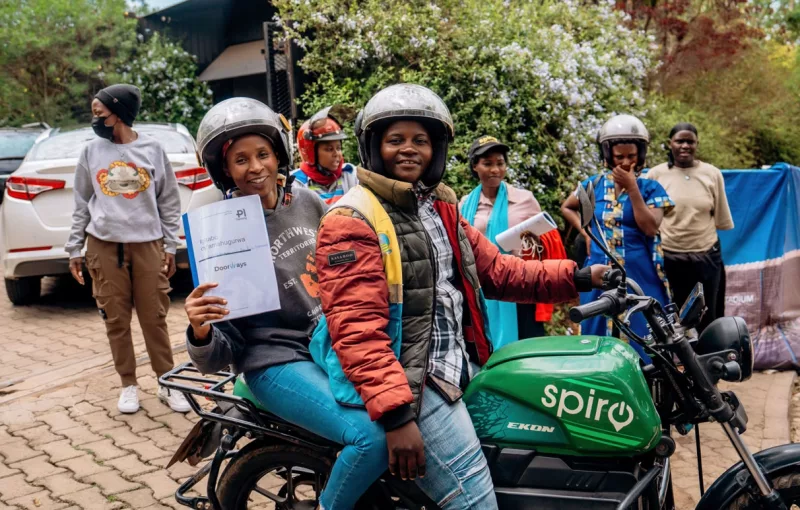
Spiro and Entrepreneurial Solutions Partners (ESP) have started a Women in E-Mobility programme in Rwanda, with 50 women beginning training in October 2026.
The pilot aims to enrol 500 women in Rwanda before scaling to other African markets, targeting a total of 5,000 participants by 2030.
Women currently represent only four per cent of transport workers in Rwanda, although a 2025 Kigali survey showed 47.7 per cent of women would consider motorcycle taxi work.
The curriculum combines practical riding and road-safety instruction with financial-literacy, digital-skills and entrepreneurship modules, and offers lease-to-own financing for Spiro electric motorcycles and access to its battery-swapping network.
Graduates will also be linked to ride-hailing, delivery and logistics platforms to help them secure customers and build sustainable businesses.
Spiro Group chief executive Anant Badjatya said: “we are giving women the tools to become professional drivers, build their own businesses and generate income.”
ESP co-founder and chief executive Eric Kacou added: “For women entrepreneurs, having access to a motorcycle is only the first step. Building a successful business also requires skills, financing, customers and ongoing support.”
Rwanda was chosen because of its growing electric-mobility ecosystem and Spiro’s existing assembly facilities and battery-swapping stations there.
The pilot will monitor participants’ earnings and business performance before the programme is rolled out to other countries where Spiro operates between 2027 and 2030.
To fund the expansion, Spiro and ESP are courting development finance institutions, impact investors, governments and commercial partners to broaden financing, training and commercial opportunities.
Spiro currently operates in seven African nations, with a fleet of more than 156,000 electric motorcycles, over 2,500 battery-swapping stations and more than 57 million battery swaps, having logged over 3.1 billion kilometres.
The initiative aims to link the shift to cleaner transport with job creation, business ownership and greater economic participation for women across Africa.