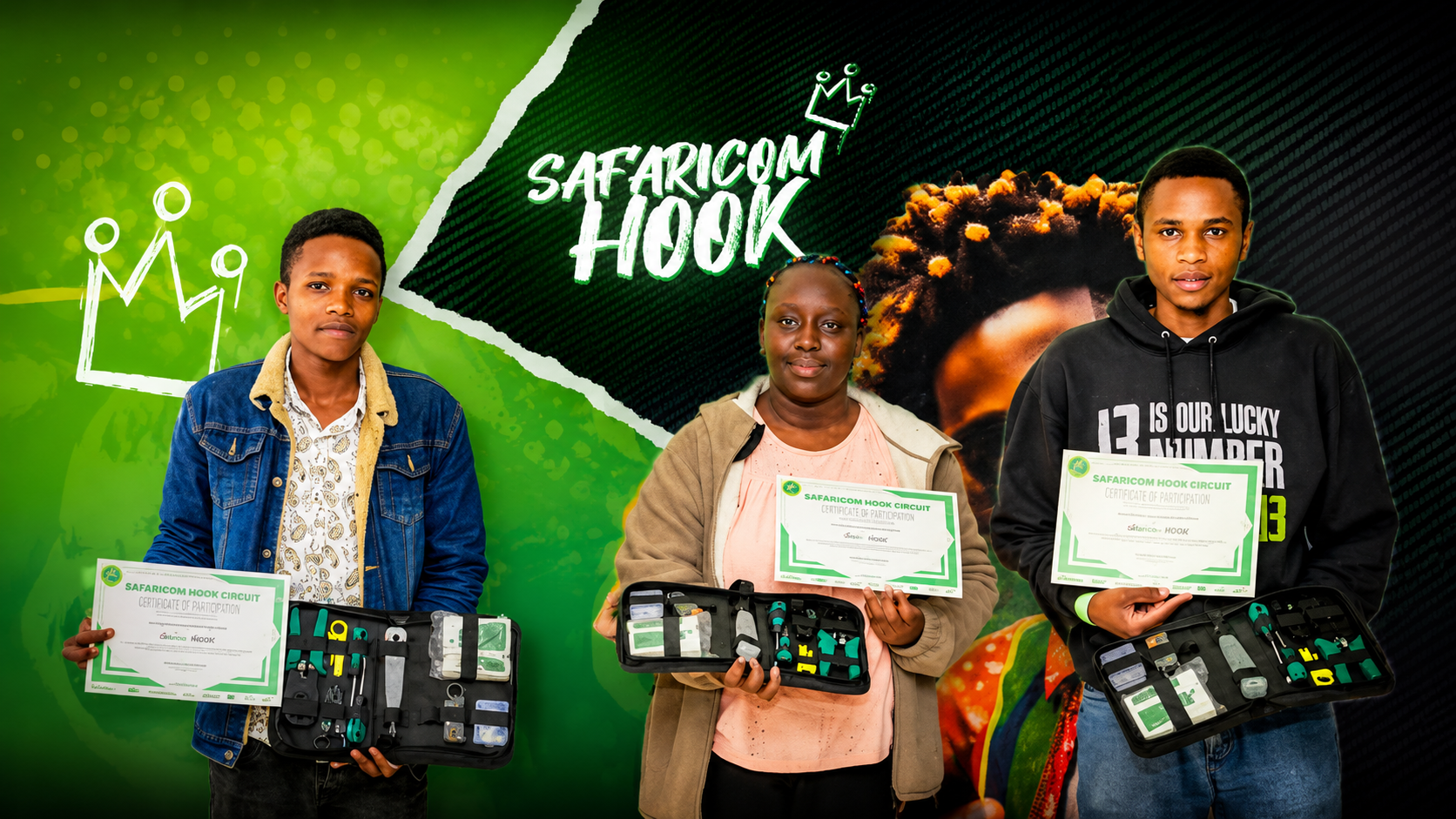
Students at Kiambu National Polytechnic spent two days immersed in a Safaricom backed training push, getting hands on exposure to digital tools, entrepreneurship pathways, and emerging career fields through the company's Hook Circle initiative.
The engagement lands at a moment when Kenya's largest telecom operator is leaning further into shaping how young people get ready for a job market that increasingly rewards adaptability over conventional employment credentials.
The programme blended practical workshops, mentorship conversations, and live technology demos, pulling in facilitators from Safaricom Hook itself alongside DigiFarm, the Power Learn Project, and the Advanced Mobility Center.
That mix put several strands of Kenya's digital economy in direct contact with students who haven't yet finished their formal schooling.
Coverage stretched well past standard vocational fare. Sessions walked students through how digital platforms are reshaping farming via Agritech tools, how entrepreneurship now leans on digital access rather than upfront capital, and how career routes outside salaried jobs have grown more workable as mobile connectivity chips away at the usual barriers to entry.
Safaricom's Chief Consumer Business Officer, Fawzia Ali Kimanthi, used the moment to argue for tighter links between industry and schools going forward.
"By bringing industry closer to learning institutions, we can help students better understand the opportunities available to them and the skills they need to pursue those opportunities, whether through employment, entrepreneurship or continued learning," said Kimanthi, Chief Consumer Business Officer at Safaricom.
Her comment cast the Kiambu session less as a one off event and more as a working template, one where a private company routinely fills gaps left by formal classroom instruction with direct, sector specific exposure.
This engagement sits inside the larger Hook Circle framework, which Safaricom rolled out in 2023 to link young Kenyans with skills training, mentorship, and openings suited to a labour market drifting steadily away from traditional employment and toward digitally driven, often self directed income streams.
By the company's own count, the programme has already reached over a million young people spread across Meru, Mombasa, Nairobi, Kakamega, Siaya, and Nyeri counties.
That footprint points to a long horizon bet on youth digital literacy rather than a one time corporate goodwill gesture tied to a single school or county.
The scale matters for how private companies are positioning themselves inside Kenya's ongoing youth unemployment conversation, an issue that has proven stubborn even as government led digital economy programs struggle to reach rural and peri urban communities at matching speed.
A telecom operator embedding itself this directly inside polytechnic classrooms hints at a shift where private capital and existing infrastructure, rather than public programming alone, increasingly determine how quickly practical skills reach students before they even graduate.
For Kiambu National Polytechnic itself, the partnership hands students a direct line to industry mentors while they're still studying, rather than after they've already left, potentially narrowing the gap between classroom training and job ready skill that has dogged Kenya's vocational education system for years.
Safaricom noted that the broader Hook community stays open to anyone between 10 and 24 years old, who can sign up either by dialing a short code or through the Safaricom App.
That low friction entry point echoes the company's wider playbook of using its existing mobile network to deliver services that would otherwise demand costly physical outreach or dedicated public funding to scale nationwide.