Kenya Electricity Generating Company (KenGen) announced that it will hold the Sustainable Energy Conference 2026 at its Olkaria Geothermal Spa in Naivasha, with the event scheduled for November 24-28 according to one release and for November 24-27 in another.
Organisers expect more than 1,500 delegates from over 80 countries, aiming to bring together roughly 200 investors, 40 financing institutions, 100 utilities and power producers and 100 exhibitors.
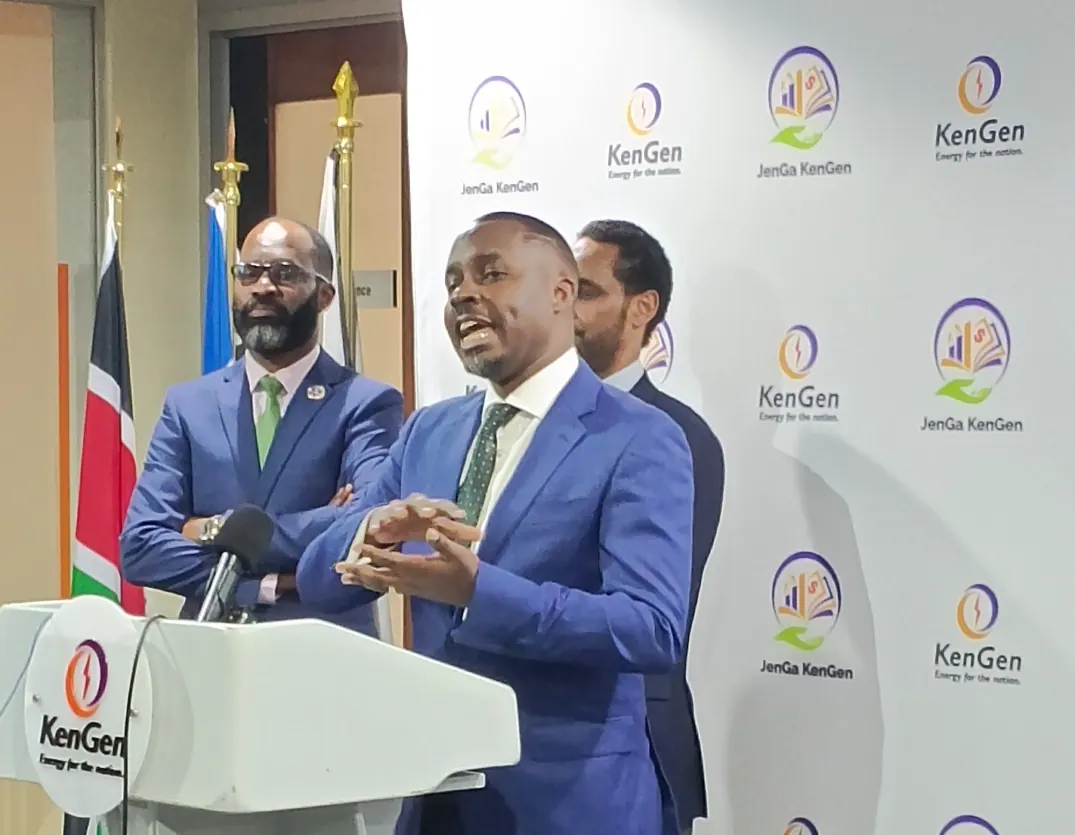
The conference theme, “Powering Africa’s Green Industrial Revolution,” will focus on investment mobilisation, project development, strategic partnerships and carbon trading, KenGen Acting Managing Director and CEO Ronoh Kibet said at the media launch.
“SEC 2026 is designed to move the green energy investment conversation from opportunity to execution,” Kibet said, adding that the agenda will link the needs of investors and lenders with those of utilities, developers and industrial customers.
KenGen is partnering with Stanbic Bank, Radio Africa Group and Kyote Network to attract capital, and Kibet noted that Africa must mobilise more financing to turn renewable resources into industrial growth, citing the International Energy Agency’s estimate of a $240 billion (KSh31.2 trillion) annual financing gap to 2030.
The IEA also warned that an additional $2-10 billion each year is required to close affordability gaps for the roughly 600 million Africans without electricity, while the International Renewable Energy Agency reported that 91 per cent of new utility-scale renewables are now cheaper than the cheapest new fossil-fuel option, with solar 41 per cent and on-shore wind 53 per cent cheaper on average.
Kenya’s renewable mix already supplies about 90 per cent of the nation’s electricity, with geothermal accounting for 47 per cent, hydro 21 per cent, wind 16 per cent and solar 4 per cent in 2025, and KenGen’s installed capacity stands at 1,786 megawatts, more than half of the national grid supply.
The company is also promoting the KenGen Green Energy Park at Olkaria, designed to use geothermal power to attract manufacturing and other energy-intensive industries, a move intended to boost job creation and local supply chains.
Peak power demand reached a record 2,549 megawatts in the financial year ended June 2026, underscoring the need for additional generation projects such as the redevelopment of Olkaria I, a solar plant at Seven Forks and an upgrade of the Gogo hydropower facility.
“Our ambition is to move from dialogue to deals, from commitments to capital, and from potential to projects,” Kibet said, emphasizing the conference’s role in converting renewable energy potential into concrete industrial investment.