Kenya will attend the Russia-Africa summit on October 28-29, with Prime Cabinet Secretary Musalia Mudavadi saying the country intends to explore opportunities in agriculture, energy, food security and emerging technologies.
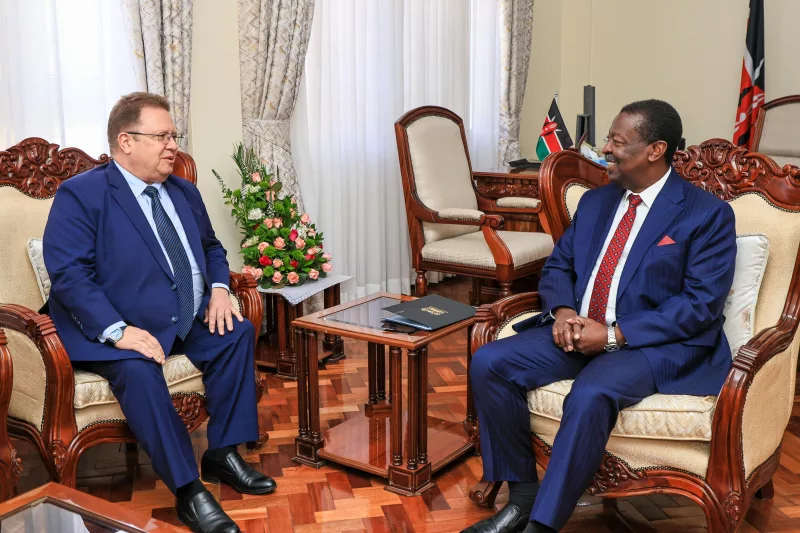
Mudavadi confirmed Kenya’s participation after meeting Russian Ambassador Vsevolod Tkachenko, stating that the government aims to turn diplomatic talks into tangible economic benefits for Kenyans.
United Nations COMTRADE data show Kenya’s exports to Russia amounted to $48.48 million (about KSh6.3 billion) in 2024, while imports reached $589.78 million (about KSh76.6 billion), leaving a merchandise trade deficit of roughly $541.3 million (KSh70.2 billion), with imports more than twelve times the value of exports.
Kenyan exports to Russia peaked at $95.9 million in 2021, fell to $34 million in 2023 and recovered partially to $48.48 million in 2024; imports rose from $312.5 million in 2022 to nearly $590 million in 2023 and remained at a similar level in 2024.
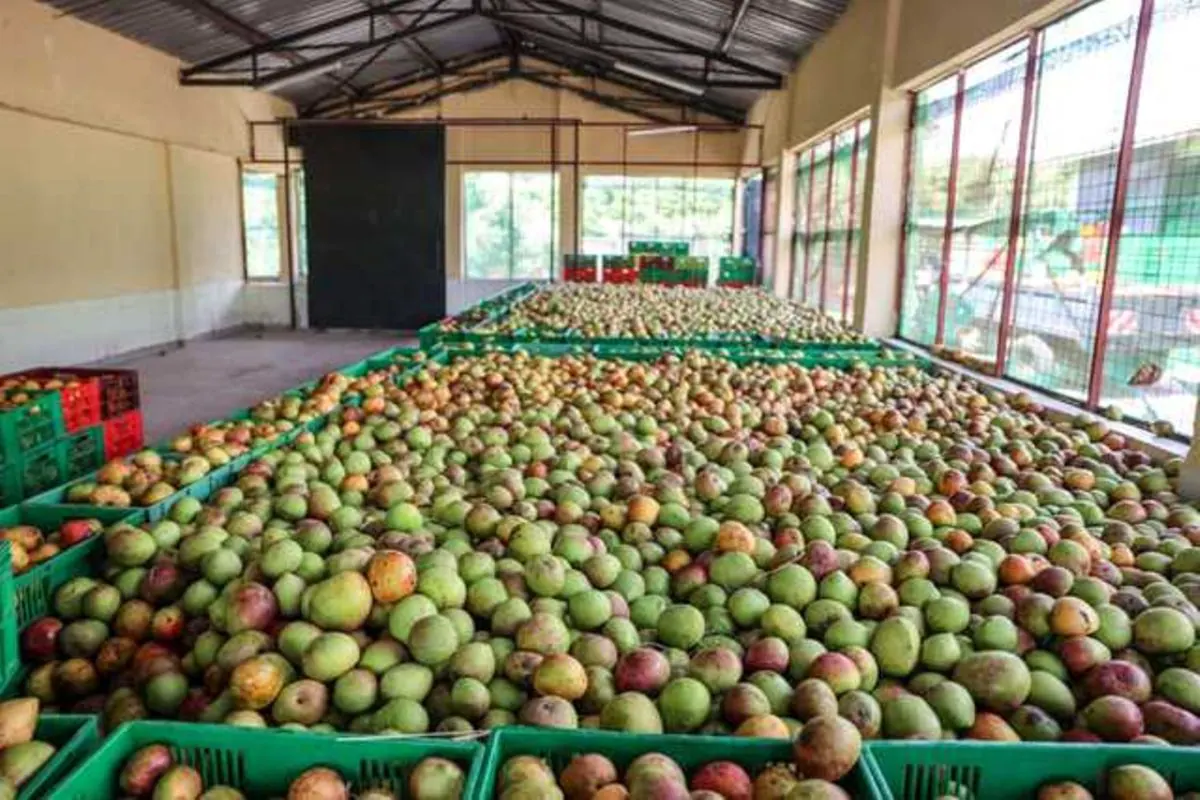
In 2024, Kenya’s exports to Russia were dominated by coffee, tea and spices, accounting for about $46.3 million, while imports were led by cereals worth $506.2 million and fertilisers worth $81.3 million.
Global trade analyst Mutinda Mwinzi warned that “The challenge will be ensuring that the Moscow meeting delivers more than political goodwill, memoranda of understanding and promises of future cooperation,” and added that “These gains will require commercially viable agreements, financing and sustained implementation rather than diplomatic declarations alone.”
A Carnegie Endowment for International Peace study released early in the year described Russia’s African outreach as increasingly opportunistic, driven by the war in Ukraine and focused on security cooperation, military assistance and access to natural resources, while noting that “Diplomatic engagement may yield political leverage and selective commercial opportunities, but it does not automatically translate into sustained investment, industrial development, technology transfer or export growth.”
At the inaugural 2019 summit in Sochi, President Vladimir Putin pledged to double African trade to $40 billion within five years, yet trade was around $18 billion in 2022, below the roughly $20 billion peak recorded in 2018 according to the Centre for Eastern Studies, and the 2023 summit in St Petersburg attracted only 17 African heads of state, with Chatham House reporting that it failed to deliver concrete results.
Carnegie’s 2023 analysis found Russian foreign direct investment in Africa to be less than one per cent of total inflows, with commercial activity concentrated in resource extraction and energy, and noted that in 2020 Russia exported $12.4 billion to Africa while importing $1.63 billion, creating a deficit of nearly $11 billion (KSh1.4 trillion), quoting that “Russia has generally been more successful at selling goods to African markets than at building a reciprocal commercial relationship that significantly expands African exports and investment.”
A February 2026 Carnegie report highlighted a Russian strategy that leverages security assistance, military ties and resource deals to strengthen political influence in fragile states, warning that such transactional relationships can be fragile and that Russia’s economic footprint remains limited compared with larger partners even in Southern Africa.
Africa’s trade with the European Union, China and the United States stands at approximately $295 billion, $254 billion and $65 billion respectively, while France’s Africa Forward Summit in Nairobi announced €23 billion in investment commitments, including €170 million of agreements signed by the French Development Agency with Kenya covering renewable energy, digital connectivity, water management and education.
Trade expert Jeremy Majale told The Star that “Summit announcements are a starting point, not proof of delivery; the real test lies in how much pledged capital is disbursed, how many jobs are created and whether local industries gain lasting market access.”