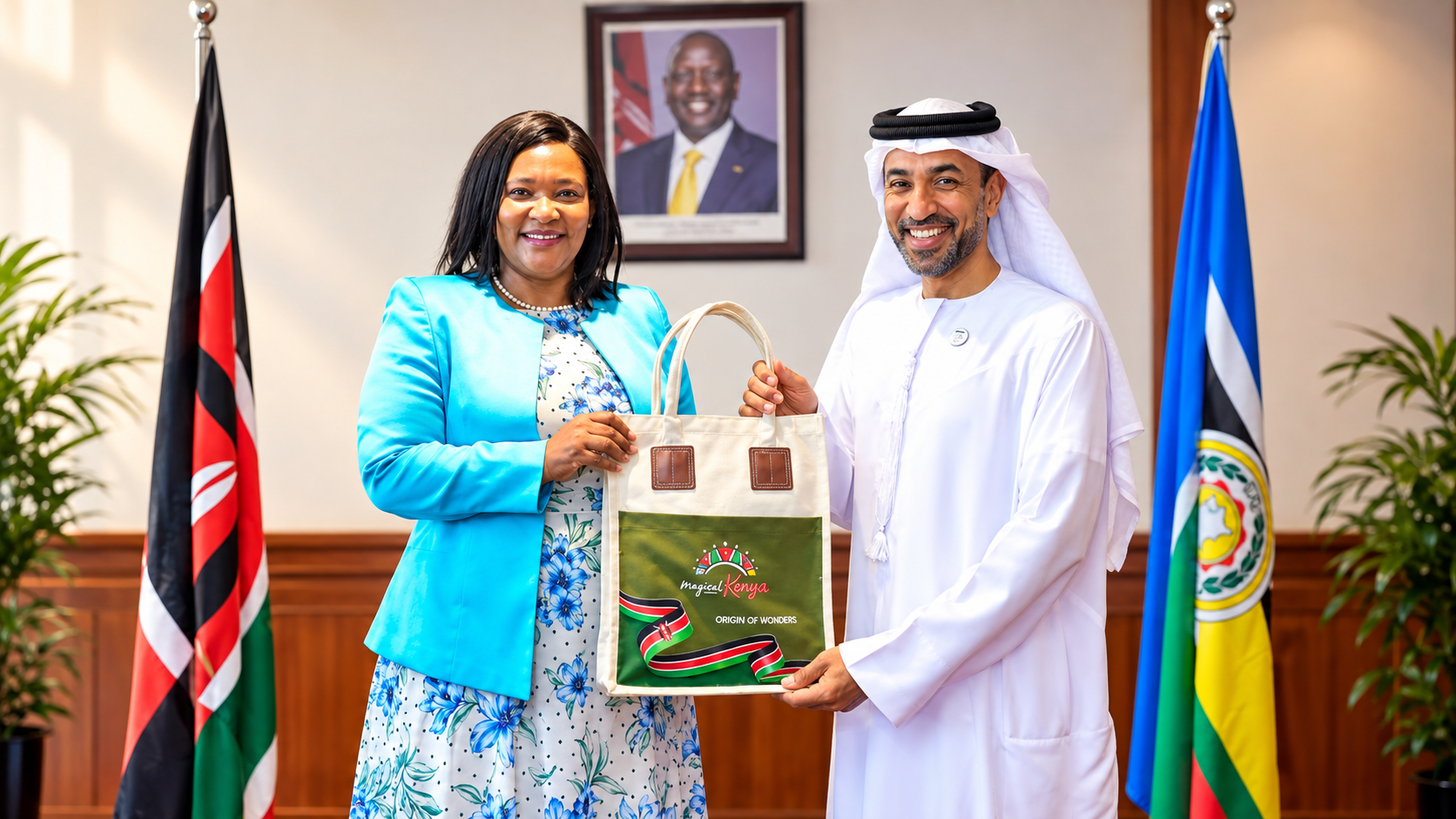
Kenya has moved to widen its tourism footprint across Gulf after high-level talks in Nairobi. Tourism Cabinet Secretary Rebecca Miano met UAE Ambassador Dr. Salim Ibrahim Alnaqbi and Mohamed Jassim Al Rais, Executive Director of Al Rais Travel Group. The discussions centred on expanding Kenyan tourism across the region.
The timing reflects a wider repositioning of policy. Traditional markets in Europe and North America remain vital, but they expose the sector to seasonal swings. Gulf markets are growing quickly, and UAE residents rank among the world's most frequent long-haul travellers relative to population.
Their spending aligns closely with Kenya's premium products. Safari lodges, coastal resorts, and conference facilities all match Gulf demand profiles. Kenya's wildlife conservancies, Indian Ocean beaches, and cultural heritage sites form a portfolio few destinations can replicate at scale.
The gap has never been the product itself. It has been access, and the absence of direct trade routes between Kenyan operators and Gulf travel houses. A working relationship with Al Rais Travel Group addresses precisely that weakness.
The firm is an established name in regional travel. Partnership arrangements give Kenyan hotels, airlines, and ground handlers direct placement in curated Gulf itineraries. That reduces reliance on fragmented intermediaries and protects operator margins across the value chain.
The economic gains reach well beyond arrivals. Tourism remains a pillar of Kenya's foreign exchange earnings, and every high-value visitor carries a broad multiplier. Lodges, carriers, and community conservancies capture revenue, while suppliers and artisans benefit from spending that filters outward.
“From our world-renowned wildlife conservancies to our sun-soaked coastlines, Kenya offers an unmatched experience for every traveller,” said Miano, Cabinet Secretary for Tourism and Wildlife.
She added that partnerships with industry leaders allow Kenya to build direct trade routes and raise destination awareness.
“Partnering with industry leaders like Al Rais Travel Group allows us to welcome a steady flow of high-value travelers from the Gulf,” said Miano. “The Middle East represents a powerful growth market for our tourism and wildlife sectors.”
The diplomatic dimension carries practical weight as well. The UAE anchors one of the world's densest air transport networks. Closer coordination between Nairobi and the Emirates can accelerate airline talks, visa facilitation, and joint marketing campaigns.
Aviation access is the hinge on which any Gulf strategy turns. Expanded airlift determines whether marketing gains convert into actual arrivals at Kenyan airports and coastal gateways.
“By deepening these trade alliances, we are creating sustainable economic opportunities for local communities across Kenya,” said Miano. “The future of Kenyan tourism is global, collaborative, and bright.”
Whether the initiative matures into scheduled routes and measurable growth depends on execution by both sides. Still, the direction is clear. Nairobi now treats the Gulf as a core growth corridor, and the latest engagement moves that ambition from principle toward structure.