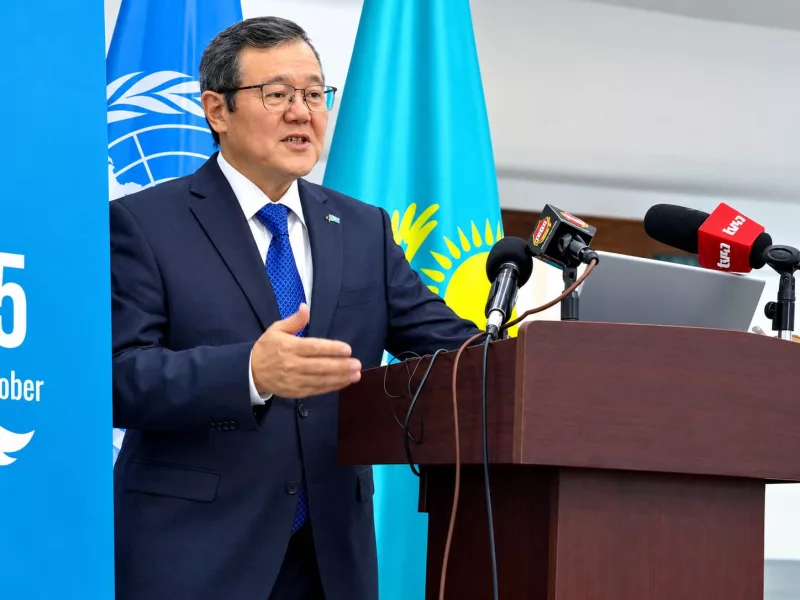
The Republic of Kazakhstan ambassador to Kenya, Barlybay Sadykov, announced that Kenya and Kazakhstan will explore setting up tea and coffee processing and distribution hubs in Kazakhstan to give Kenyan exporters access to Central Asian markets.
The proposed sites would handle processing, packaging and distribution of Kenyan products across Kazakhstan and neighbouring economies, and the ambassador said Kazakhstan is prepared to offer incentives available in its special economic zones for Kenyan investors.
“We are interested in increasing imports of Kenyan products, including tea, coffee, flowers and fruits,” Sadykov said during a briefing on Kenya-Kazakhstan relations.
The initiative follows President William Ruto’s May 2026 visit to Kazakhstan, during which the two countries signed ten bilateral agreements covering trade, finance, investment, transport, logistics, ICT, mining, space technology, tourism and diplomatic academy cooperation.
Sadykov estimated current bilateral trade at about $50 million (KSh6.5 billion) and said the level does not reflect the commercial potential of the two economies.
He urged Kenyan exporters to sell directly to Kazakhstan rather than through Pakistan, suggesting that direct trade could open new opportunities for Kenyan businesses.
In addition to agricultural trade, Kazakhstan’s national mining company Tau-Ken Samruk signed a memorandum of understanding with Kenya’s National Mining Corporation, and a Kazakh delegation is reviewing mineral samples to assess possible exploration, development or processing projects.
Discussions are also under way with the Kenya Ports Authority about using Mombasa and Lamu ports to move Kazakh goods into regional markets, with transport costs cited as a barrier that can account for up to 40 per cent of the price of some goods.
Both sides are considering a bilateral business council and trade missions, and the Kazakh embassy is assisting Kenyan firms in finding new suppliers of grain, fertilisers, petrochemicals, construction materials and processed foods, while warning importers to verify suppliers to avoid online fraud.
“The current indicators of trade and economic cooperation do not meet the potential,” Sadykov said, calling for greater diversification of exports and imports.