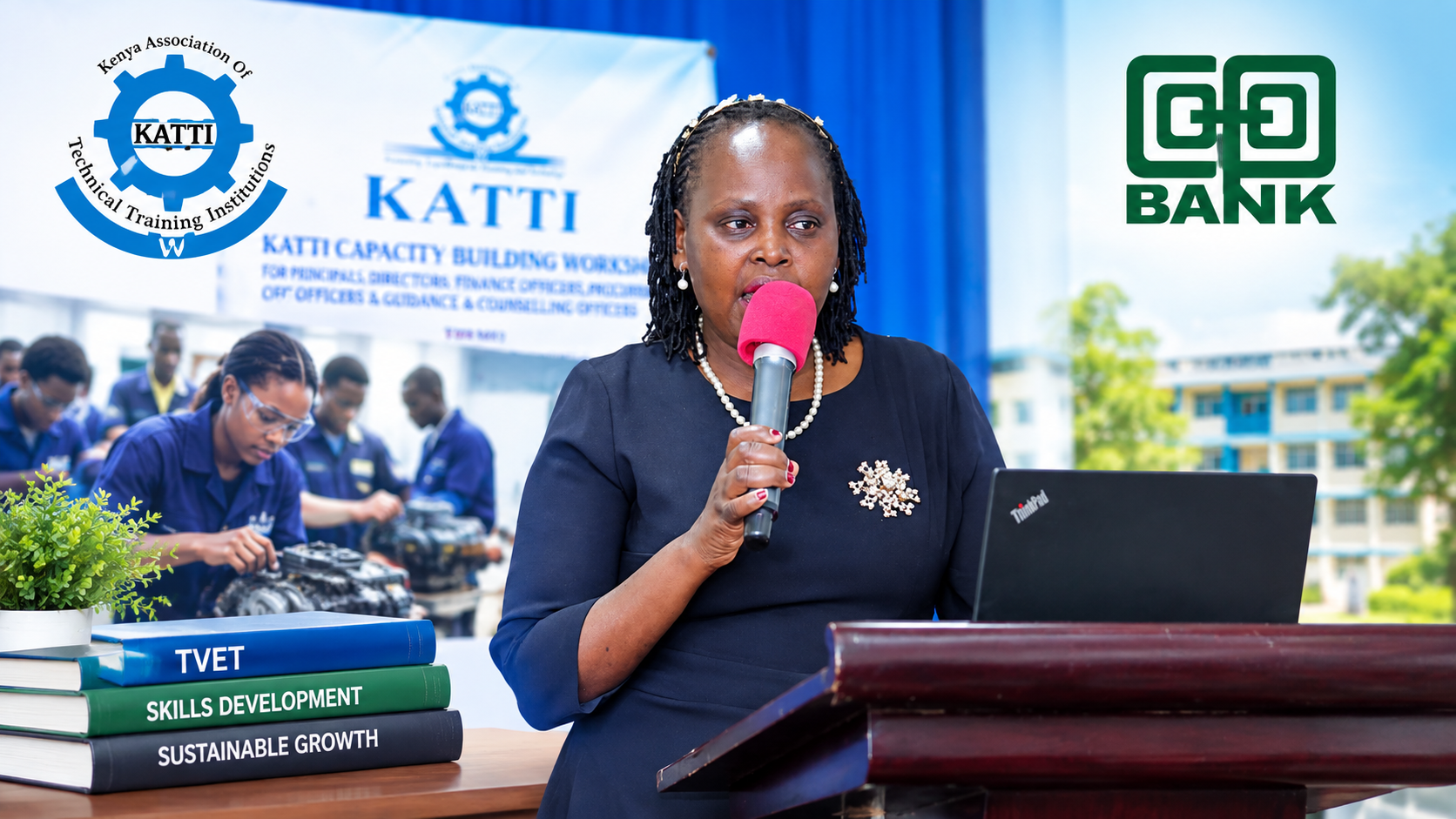
The Cooperative Bank of Kenya has joined a capacity building workshop run by the Kenya Association of Technical Training Institutes.
The four day forum is taking place at PrideInn Plaza in Mlolongo. It runs from August 26 to August 29, 2026, bringing together leaders from TVET institutions. Lena Yego, the bank's Head of Retail Banking, led the lender's delegation to the event.
Those attending include principals, directors, finance officers, procurement officers, and guidance and counselling officers. The mix of roles reflects the range of financial and administrative pressures facing technical institutions across the country.
KATTI designed the four day forum as a platform for professional development, networking, and partner engagement. It also gives institutions room to engage strategic partners on funding and operations. Attendance spans public and private colleges drawn from every region of the country.
Funding remains the most stubborn operational problem confronting Kenya's technical training system today. The State Department for TVET asked Parliament for an extra Ksh 19,200,000,000 in May 2026.
The money was meant for student scholarships, pending supplier bills, and other financial obligations. Principal Secretary Esther Muoria told MPs that the deficit threatened sponsorship programmes for vulnerable learners. She said unpaid suppliers and delayed disbursements could disrupt training across several institutions.
Those sponsorship programmes help keep students enrolled and reduce dropout rates across the sector. Delayed capitation and erratic Higher Education Loans Board disbursements have weakened enrolment nationwide.
Current enrolment stands near 700,000 learners against a government target of two million. That gap shows how far the sector remains from its planned expansion under the competency based curriculum.
A separate request sought Ksh 589,000,000 for equipment and workshop upgrades in 69 institutions. The 2026/27 budget allocated Ksh 58,500,000,000 to TVET institutions across the country.
Education received Ksh 784,500,000,000, the largest share of the national budget. Within the TVET envelope, Ksh 9,200,000,000 went to student scholarships and related support.
Another Ksh 2,100,000,000 was earmarked for construction and equipping of training centres. A further Ksh 7,300,000,000 was directed to TVET development programmes and institutional upgrades.
These allocations still fall short of the sector's stated financial needs. Institutions remain exposed to persistent cash flow disruptions and delayed disbursements.
Many TVET centres struggle with equipment maintenance, training materials, and underdeveloped income generating projects.
The shortfall affects workplace learning and the quality of technical instruction offered to students. It also weakens the supply of skilled graduates for industry. Employers have repeatedly complained about gaps between classroom training and workplace demands.
For Cooperative Bank, the workshop represents a strategic engagement with a capital starved sector. The lender already offers school fees advances of up to Ksh 2,500,000 to eligible customers.
It also finances school infrastructure and vehicle acquisition through asset finance products. Working with finance and procurement officers helps the bank build long term institutional relationships.
Those officers control accounts, procurement decisions, and capital projects at the institutional level. The bank's education portfolio has grown as institutions seek alternatives to strained government funding.
Lenders that understand TVET operations can structure products around capitation cycles. That gives them an edge over competitors chasing the same institutional clients.
The Mlolongo forum will ultimately be judged by what happens after the certificates are issued. Past KATTI sessions have produced professional development points but uneven implementation.
If partners convert discussion into operational change, the workshop will matter beyond its four day schedule. The bank's presence may help turn that ambition into bankable projects.