Equity Group announced profit after tax of KSh71.5bn for the nine months to September, a 32 per cent increase on the same period a year earlier.
Profit before tax rose to KSh89.8bn, up 37 per cent, while total income grew 23 per cent to KSh192bn, according to the third-quarter investor presentation.
Net loans expanded 17.2 per cent year on year to KSh1.01tn, surpassing the full-year guidance range of 8 per cent to 12.5 per cent.
Customer deposits increased 19.4 per cent to KSh1.58tn, above the target range of 8 per cent to 10 per cent.
Return on average assets reached 4.6 per cent, exceeding the 2026 guidance of 3.5 per cent to 4 per cent, and return on average equity was 27.2 per cent, within the 25 per cent to 30 per cent target.
Regional subsidiaries contributed 49.2 per cent of profit before tax and held 55.2 per cent of total assets in the quarter, aligning with the profit contribution guidance of 45 per cent to 50 per cent and slightly above the asset share target of 50 per cent to 55 per cent.
In 2025 the group held a 12.5 per cent share of Kenyan banking assets, ranking second behind KCB Group’s 17.9 per cent; in the Democratic Republic of Congo it owned 22.8 per cent of assets behind Rawbank’s 28.9 per cent; in Rwanda it held 17.3 per cent versus BPR’s 16.6 per cent; in Uganda it had 5.3 per cent ranking fifth; in Tanzania it owned 1.9 per cent ranking 13th; and in South Sudan it held 17.9 per cent, the third-largest position.
Loan growth outpaced the upper end of guidance by 4.7 percentage points, while deposit growth exceeded the ceiling by 9.4 points.
Total assets rose 18 per cent year on year to KSh2.15tn.
Net interest margin was 8.4 per cent, within the 8.3 per cent to 9 per cent range, and non-funded income accounted for 43.9 per cent of total income, inside the 40 per cent to 45 per cent target.
Non-funded income grew 36 per cent to KSh55.6bn in the first half of 2026, while net interest income rose 17 per cent to KSh69.3bn.
Management said the increase in non-funded income stemmed from cross-border trade finance, loan appraisal fees, digital transactions and insurance income.
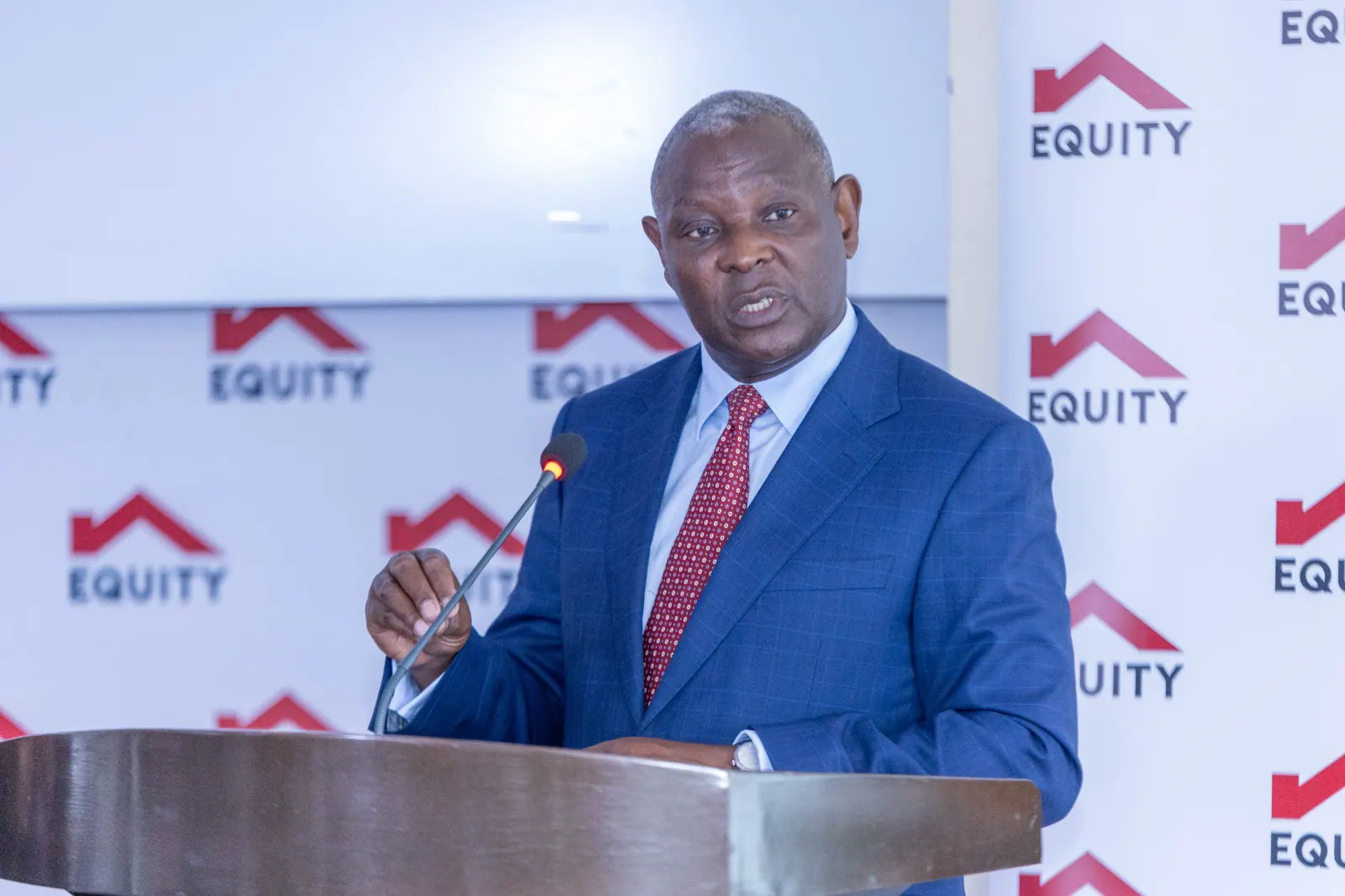
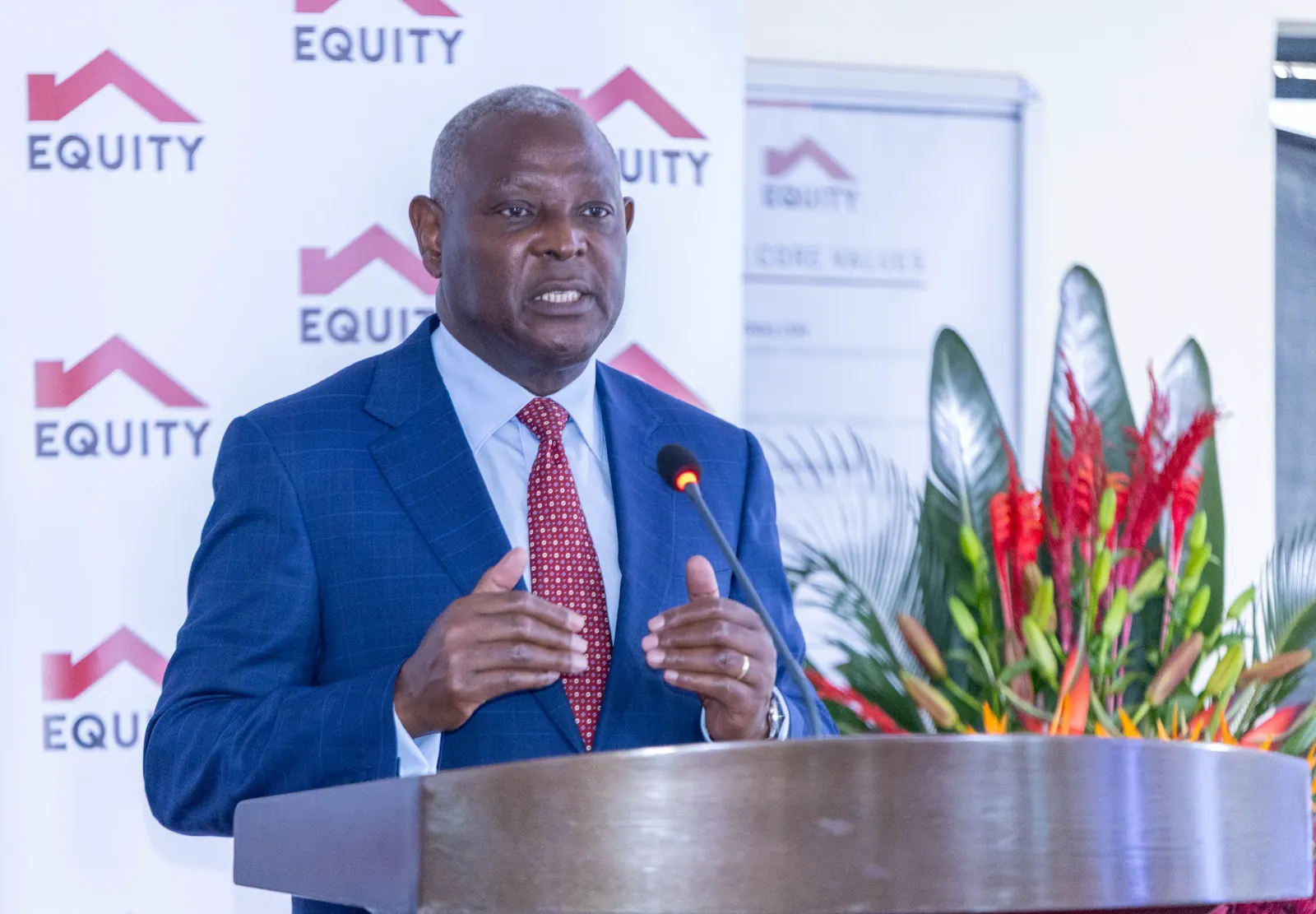
Group managing director James Mwangi said he expected non-funded income to eventually represent roughly half of revenue as it continued to grow faster than interest income.
The cost-to-income ratio stood at 47.9 per cent, within the 46 per cent to 49 per cent band, and the cost of risk was 1.5 per cent, inside the 1.25 per cent to 1.8 per cent range.
Non-performing loans made up 9.3 per cent of gross loans, down from 12.1 per cent a year earlier, though the absolute amount rose slightly to KSh100.2bn from KSh99.7bn in the second quarter; the group’s full-year target is 7 per cent to 9 per cent.
Provision coverage was 70.9 per cent.
Digital channels processed 89.5 per cent of transactions in the quarter, and 98.3 per cent of all transactions occurred outside branches, matching the share recorded in the first quarter of 2026.
Branch transactions fell to 1.7 per cent of total, down from 3.7 per cent in the third quarter of 2019, while agency transactions declined to 5.2 per cent from 12.2 per cent in the same earlier period.
New digital features introduced in 2026 include biometric payment authorisation via the Equity Mobile App and the ability for customers to pre-approve agents for mobile-money float purchases.
The nine-month results show the bank expanding its loan and deposit base faster than projected, with regional operations now supplying almost half of pre-tax earnings and profitability metrics largely meeting or exceeding targets, while the non-performing loan ratio remains above the desired range.