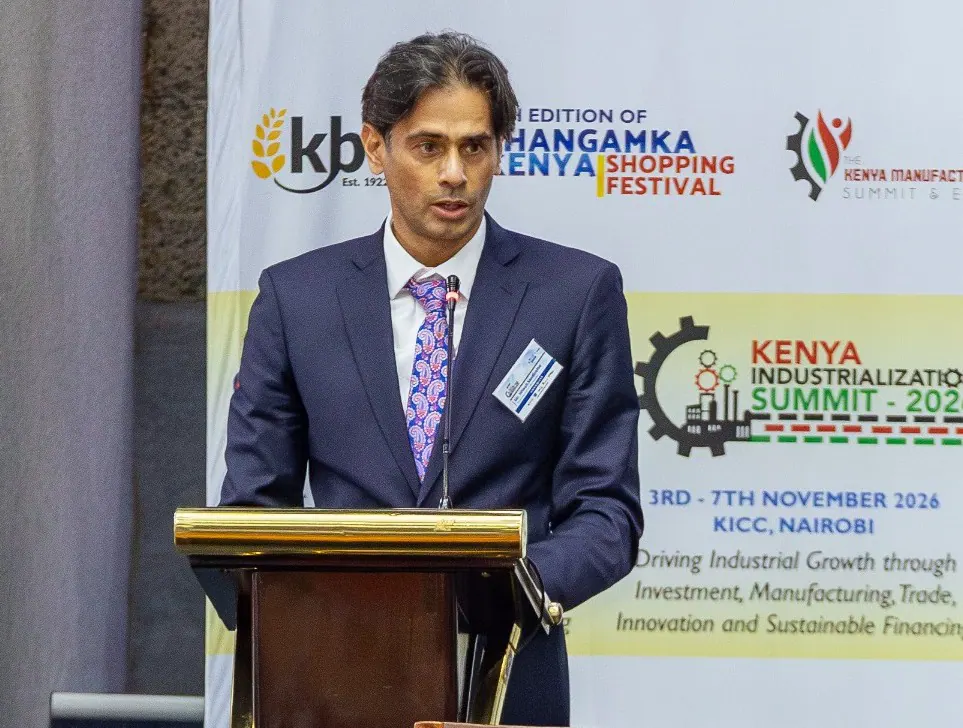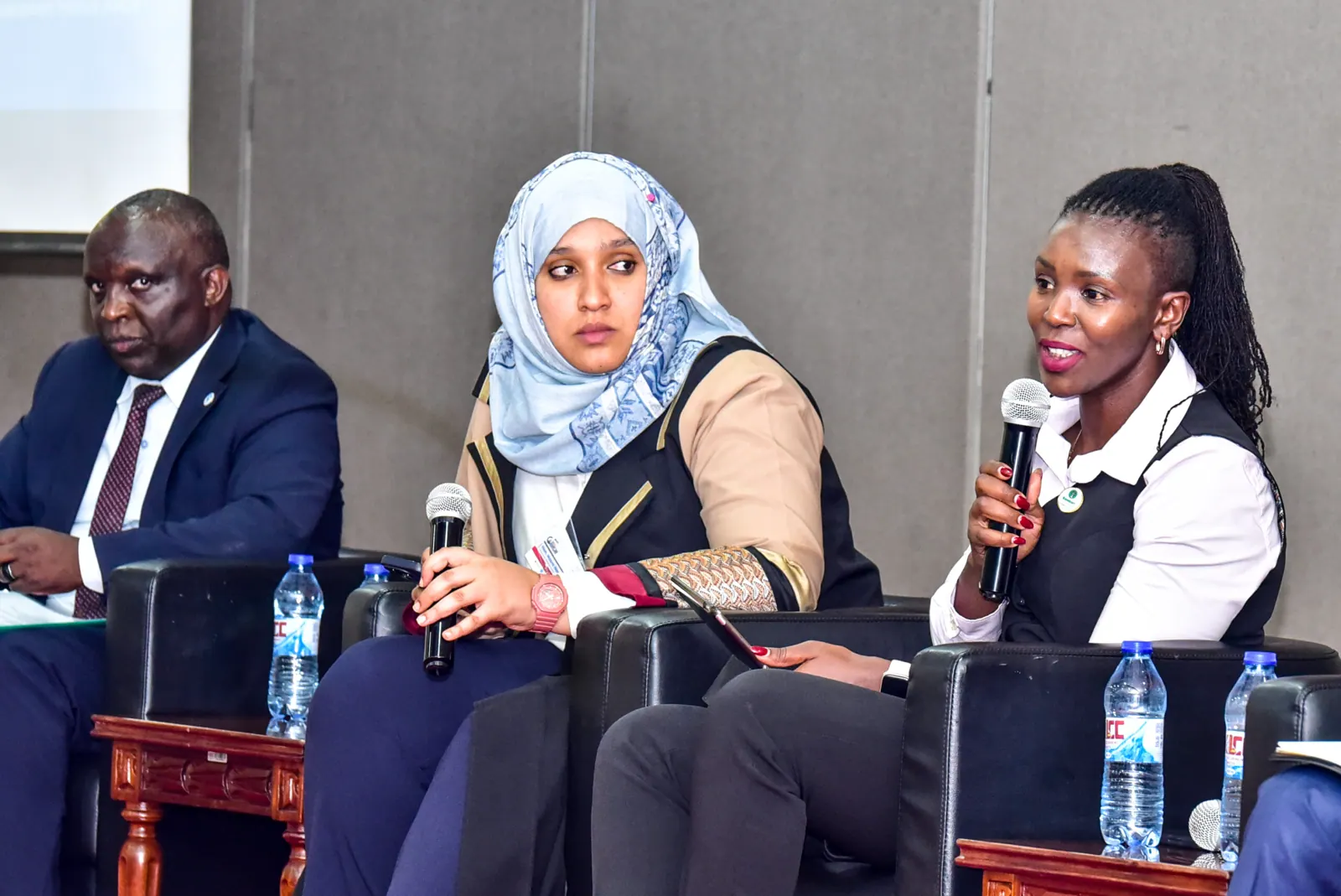
At the Kenya Industrialisation Summit 2026, which President William Ruto officially opened and the Ministry of Investments, Trade and Industry hosted, Eng. Jane Wangari, Sustainability and Corporate Affairs Director of Bamburi Cement Plc, urged both state and private developers to switch to low-carbon building materials.
Wangari said that embedding decarbonisation criteria into government tender assessments would give extra points to suppliers offering cement with reduced emissions, and she asked that the Central Bank of Kenya’s Green Finance Taxonomy be expanded to cover such materials to unlock financing for large-scale builds.
To illustrate commercial feasibility, Bamburi displayed its flagship product, Bamburi DuraCem, a 42.5-grade cement resistant to sulphates and chlorides and intended for marine, coastal and heavy-duty works. The cement is produced using alternative fuels such as rice husks and waste tyres, which the company says cuts carbon dioxide output by 64 per cent compared with ordinary Portland cement. “As cement manufacturers, we are actively playing our net-zero part to facilitate green manufacturing, affirming that it is no longer a pipe dream to deliver products with lower carbon dioxide emissions,” Wangari said. “We have proved that green manufacturing can be done, as one 50-kg bag of Bamburi DuraCem carries about 64 per cent less carbon dioxide than ordinary Portland cement. That is roughly 25 kg of carbon dioxide saved per bag, about the same as burning 10 litres of petrol.”
Wangari highlighted the recent construction of Mombasa’s Makupa Bridge as a case study, noting that the use of DuraCem saved more than 10 million kilograms of carbon dioxide during the project. She added that wider uptake across state and commercial real-estate schemes would create a multiplying effect on Kenya’s industrial decarbonisation.
The company also called for uniform industry metrics and independently verified Environmental Product Declarations, describing such labels as “like a nutrition label on a packet of unga” to make emissions data transparent for buyers.
Bamburi is positioning itself to supply over one million tonnes of cement for the proposed Dangote East Africa Petroleum Refinery and Petrochemical Special Economic Zone in Lamu County, where the SEZ will give preference to locally produced inputs. Its existing portfolio includes the Talanta Sports Stadium, the Rironi-Mau Summit Road, the Standard Gauge Railway, the Dongo Kundu Highway, Mwache Dam and Thwake Dam.
In parallel with the market push, Bamburi signed a US$250 million (KSh32 billion) engineering, procurement and construction contract with Sinoma CBMI Construction Co., Ltd to build a clinkerisation plant in Matuga, Kwale County. The new facility will have an annual clinker capacity of 1.6 million tonnes, employing carbon-neutral and waste-heat recovery technologies, and will raise the company’s clinker capacity from 1.0 million to 2.6 million tonnes and cement output from 1.8 million to 4.0 million tonnes per year.