The African Development Bank has signed a KSh10.6 billion financing package to close the funding gap on the Thwake Multipurpose Dam in Kenya.
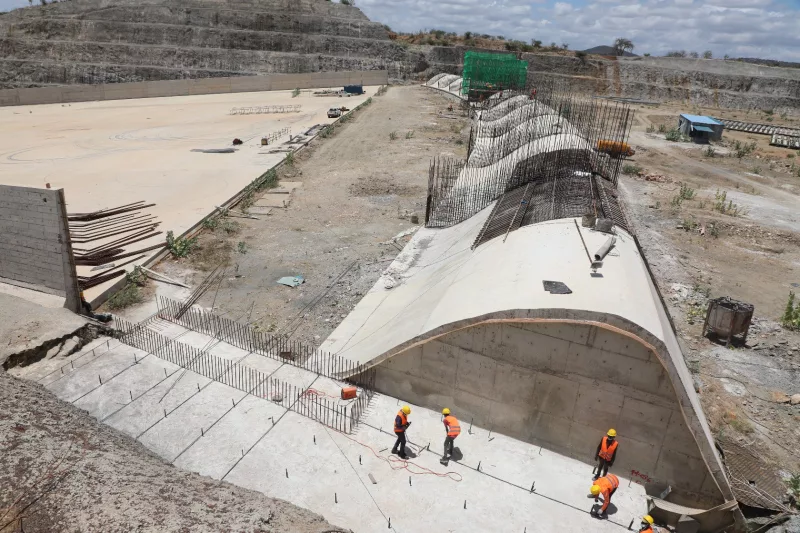
The dam, 80.5 metres tall and situated at the Thwake-Athi river confluence on the Makueni-Kitui border, was 94.2 per cent complete when the agreement was announced on Thursday.
The new funding follows an earlier approval in June 2026 of €68.4 million (KSh10 billion) for the first phase and €15 million (KSh2.2 billion) of counterpart funding from the Kenyan government.
Mtchera Chirwa, AfDB director for Water and Sanitation, said the bank is also discussing financing for downstream works that will turn the dam into tangible economic benefits, adding “As a Bank, we will ensure the project reaches completion and achieves the benefits. This means provision of water for food security; implementation of the irrigation component, water supply and sanitation for residents and hydropower for energy generation.”
The reservoir will hold 688 million cubic metres of water, covering about 9,217 acres and drawing from a catchment of roughly 10,276 square kilometres, making it one of the country’s largest water bodies.
The programme comprises four phases – dam construction, hydropower generation, water supply and sanitation, and irrigation development.
Downstream projects are projected to supply up to 150,000 cubic metres of treated water daily to an estimated 1.3 million people in Makueni, Kitui and the Konza Technopolis in Machakos County.
The scheme also includes a 20-megawatt hydropower plant and an irrigation component intended to serve up to 40,000 hectares (around 100,000 acres) of farmland.
Water Secretary Samuel Alima said construction has resumed after the funding shortfall was closed, with work now focused on the concrete face slab and a bridge linking the two counties; “The contractor has resumed with the concrete face already having some panels, while others are also under preparation. They have also started doing the bridge,” he said.
The ministry aims to impound water by the end of January 2027 and to commission the dam in April, subject to the completion of the remaining works.
The first phase of the project is estimated at KSh42.4 billion, financed jointly by the AfDB and the Kenyan government, while the original design placed the total four-phase cost at 487 million units of account, an AfDB accounting unit whose value varies with exchange rates.
Beyond alleviating water scarcity, the dam is expected to regulate Athi River flows, reduce flood risk and improve water availability during dry periods.
The irrigation element is also expected to lessen farmers’ reliance on erratic rainfall and boost food production in the semi-arid Lower Eastern region.
Alima noted that parallel initiatives to clean the Nairobi River system, including sewage collection, wastewater treatment and river widening, are underway to enhance water quality.